

Why Infusion Centers Lose Revenue Before Claims Are Submitted and How Infusion Revenue Cycle Management Prevents It
Find out where infusion centers lose revenue before billing starts and how Infusion Revenue Cycle Management helps protect every dollar earned.
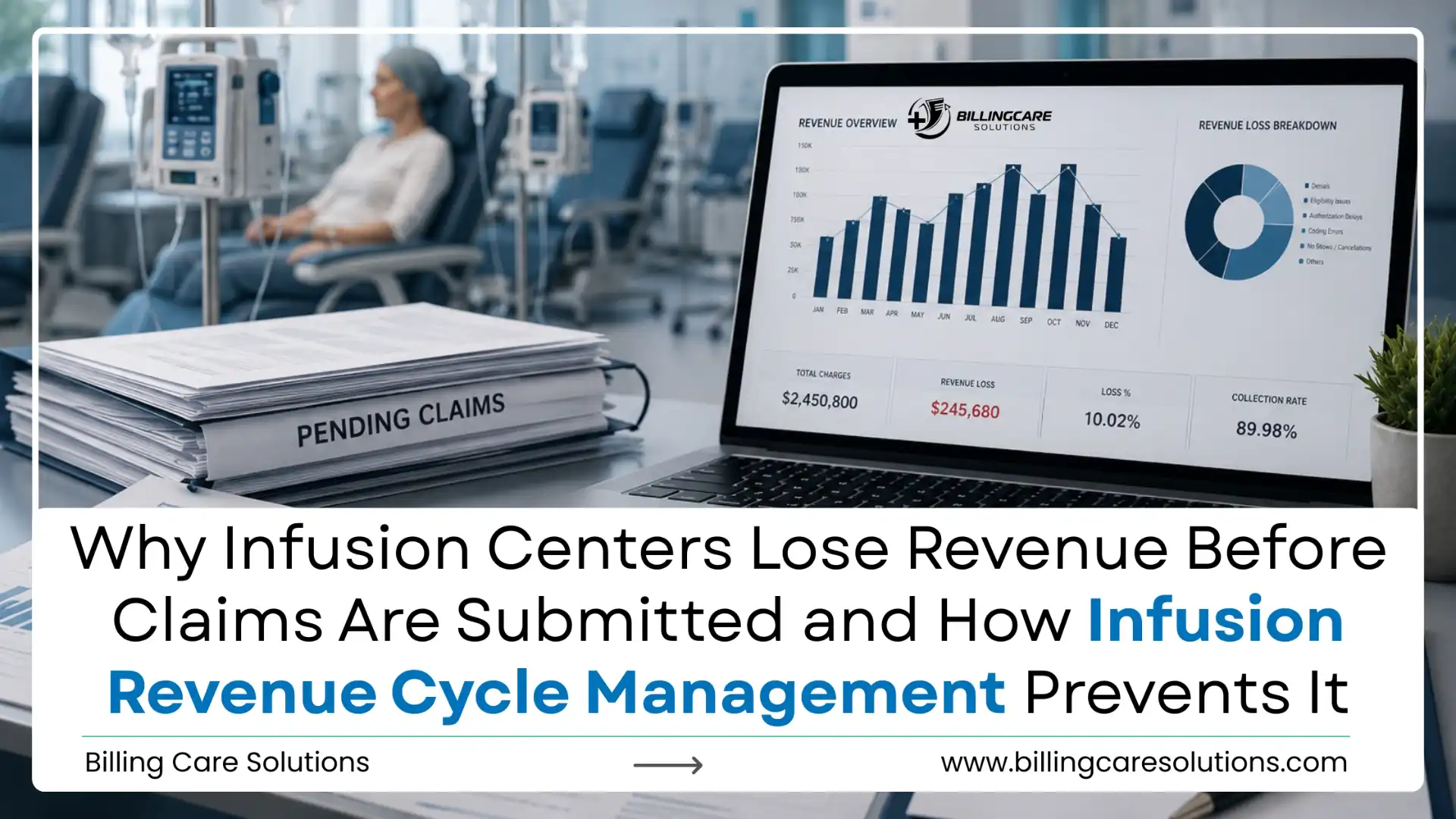
Infusion Revenue Cycle Management starts before a claim even is sent to the payer. You receive a high-cost biologic at an infusion center and they document the treatment and submit the claim with the hope of reimbursement. The claim is denied, as prior authorization lapsed during therapy, weeks after. Thousands of dollars in reimbursement may be lost and hours of appeal staff time wasted because of one misstep. According to industry estimates, the average infusion claim denial rate is approximately 15% and specialty drug claims are often the ones that involve significant financial risk.
The majority of infusion centers are losing money even before claims are filed. Denials and payment delays are avoidable due to errors made with prior authorizations, insurance verification, patient registration, documentation, and charge capture. Researchers estimate that 30 percent of denials are related to the lack of prior authorization, and 22 percent of denials are due to incomplete documentation. These are operational failures, not payer choices.
This blog details where pre-claim revenue leakage can happen and how effective a solution like Infusion Revenue Cycle Management can be for preventing denials, improving cash flow and boosting reimbursement for infusion centers.
The Five Pre-Claim Revenue Leakage Areas
1. Intake and Eligibility Verification Failures
Revenue leakage begins at the first patient contact. When intake processes are not optimized, your practice loses revenue before treatment even starts. The National Infusion Center Association says quality intake is the key to infusion and specialty center financial success. If everything is taken in smoothly, transparently and accurately, the remainder of the care journey goes accordingly. Strong Infusion Revenue Cycle Management begins with intake.
The Problem: An accurate patient information system is the backbone of any unsuccessful billing process. Patient information, insurance information, or contact information is wrong, and claims are denied, while staff hours are wasted in the process. Industry statistics indicate that claim denials may occur due to inaccurate or outdated patient information when it could have been avoided if the information was accurate.
| Intake Error | Impact | Financial Consequence |
|---|---|---|
| Incorrect patient demographics | Claim rejection | Rework cost of USD 25 to USD 118 per claim |
| Missing insurance verification | Denial for ineligibility | Complete loss of revenue for the service |
| Inaccurate contact information | Failed communication | Delayed payments and patient dissatisfaction |
| Unverified coverage details | Claim denial | Lost revenue and patient balance issues |
The Solution: Put in place a strict intake process with the verification of existing email addresses, mobile numbers, preferred communication channels and consent for digital notifications. Fully cleaned and verified data allows for timely billing, minimized returned mail and failed contact attempts, while also helping to meet communication rules and regulations. This is one of the core elements of Infusion Revenue Cycle Management.
2. Prior Authorization Hurdles
One of the most important causes of lost revenue due to pre-claim in infusion centers is prior authorization. It’s been shown that centralization of prior authorization services contributed to a 68% decrease in denials, and reflected an estimated USD 1.4 million savings in the study published in the American Journal of Health-System Pharmacy. The total initial denials dropped by 50 per cent equating to cost savings of USD 3.8 million. Prior authorization is a key element of Effective Infusion Revenue Cycle Management.
The Problem: Complex, repeated prior authorizations are common with high dollar specialty drugs. There are multiple brands and policies to deal with from providers. Once a single authorization is lost, a USD 30,000 infusion of immunotherapy is a lost opportunity that can’t be easily recovered through the appeals process. Industry reports state that 30 percent of denials are due to lack of or expiration of prior authorization.
| Prior Authorization Issue | Impact | Financial Consequence |
|---|---|---|
| Missing prior authorization | Claim denial | Loss of USD 10,000 to USD 30,000 per claim |
| Expired authorization mid-treatment | Claim denial | Complete write-off of treatment revenue |
| Payer-specific authorization requirements | Delayed approval | Delayed treatment and revenue |
| Clinical criteria not met | Authorization denial | Lost revenue and patient access issues |
The Solution: Have a single centralized prior authorization process without going to each payers’ website to collect approval times, first-time denials, and the usual reasons for denials. This will help to avoid rejections and speed up the money. As industry expert notes, embedding with a provider or pharmacy and being the provider’s data partner is like having to hire and train their very own data team. This is an essential approach in the case of Infusion Revenue Cycle Management.
3. Eligibility and Benefits Verification Gaps
Denied insurance claims are a costly challenge for infusion centers’ revenue cycle management. Some major commercial payers face claim denial ranging from 1.63 percent to 9.6 percent, according to the AMA, with some as high as 23 percent. Late payments and claim denials result in more expenses for infusion centers, thereby causing disruption in the entire revenue cycle. Infusion Revenue Cycle Management needs to solve these issues.
The Problem: If patient insurance isn’t confirmed prior to treatment, the clinic runs a number of risks. The clinic shall not be reimbursed for the clinical infusion service costs if the claim is denied for the insurance. Patient parties might not be capable of reimbursing an infusion facility with out-of-pocket charges on a particular claim denial event. The outstanding balance is a sunk cost of the facility.
| Eligibility Gap | Impact | Financial Consequence |
|---|---|---|
| Unverified coverage | Claim denial | Complete loss of service revenue |
| Unknown deductibles and copays | Patient balance issues | Bad debt write-offs |
| Coverage limitations not identified | Denial for non-covered service | Lost revenue and patient dissatisfaction |
| Dual coverage not verified | Coordination of benefits errors | Delayed payments and confusion |
The Solution: Use eligibility and benefits verification services to verify patient’s coverage and deter treatment restrictions. Validation of insurance eligibility and benefits covered under a patient’s insurance plan is a systematic process that’s key to validating. This involves collecting patient details, cross-referencing this information with the insurance policy, checking data and obtaining approval from the insurance provider, patient communication about out-of-pocket expenses, and patient data tracking. It’s a pivotal part of Infusion Revenue Cycle Management.
4. Coding and Documentation Errors
Some of the most frequent sources of pre-claim revenue leakage are coding errors. So, Medical Billers and Coders reports that 17 percent of claims are being rejected due to minor coding mistakes. Since 20 percent of oncology claims are denied for avoidable mistakes, it’s essential to get them right to assure the health of your practice. Proper coding is crucial to successful Infusion Revenue Cycle Management.
The Problem: Many CPT and HCPCS codes for drug administration, hydration, and injections, as well as supportive care and drugs, may be used for each oncology infusion encounter. It’s a moving target because of frequent updates for payers and National Correct Coding Initiative edits. One of the most common reasons for denials based on current CMS structures is incorrect or missing modifiers.
| Coding Error | Impact | Financial Consequence |
|---|---|---|
| Miscalculating drug dosages | Underpayment or denial | 15 percent of errors start here |
| Missing or misusing modifiers | Claim denial | 12 percent of denials stem from modifier mix-ups |
| Incorrect J-code or NDC | Claim rejection | 10 percent of rejections trace back to NDC slip-ups |
| Missing start and end times | Denial for prolonged services | Reduced reimbursement or denial |
The Solution: Employ pre-bill claim scrubbing to review claims for missing charges, mismatching of revenue code and HCPCS combinations, missing modifiers such as JW and JZ waste modifiers, and wrong drug units prior to claim submission. This detects charge-capture errors, which represent an inordinate amount of oncology revenue leakage. This is one of the fundamental aspects of Infusion Revenue Cycle Management.
One hospital that adopted smarter coding practices saw a 75 percent drop in denial rate, from more than 20 percent to less than 5 percent, in a case study of its cancer center. Expert code review and training, systematic application of modifiers and pre-bill audits with automated claim scrubbing were all part of the solution.
5. Drug Waste Documentation Failures
Single dose vials may have more drugs than the patient actually needs. The difference between the amount billed and the amount administered is a compliance and revenue issue. Documentation requirements for JW and JZ modifiers have become more stringent and payers are more likely to be auditing drug waste claims. If waste is not captured accurately there is a loss of revenue or audit exposure. Appropriate drug waste documentation is key to Infusion Revenue Cycle Management.
The Problem: Many infusion centers are not reconciling purchased inventory with patient claims billed and against actual inventory. This can lead to a lot of lost money. Most offices will use a variety of different processes without a connected, seamless system to input patient orders, validate insurance, schedule appointments, document treatments, conduct inventory, and bill claims. Leakage is seen in the spaces between such systems.
| Drug Waste Error | Impact | Financial Consequence |
|---|---|---|
| Missing JW modifier for wasted drug | Denial or overpayment risk | Lost revenue or audit exposure |
| Incorrect waste documentation | Claim denial | Complete loss of drug reimbursement |
| Unreconciled inventory | Unbilled or lost revenue | Thousands of dollars in leakage annually |
| Missing NDC documentation | Claim rejection | 10 percent of rejections trace back to NDC slip-ups |
The Solution: Ensure accurate documentation of drug waste with JW and JZ modifiers. With proper backup documentation 65% of appeals are successful, according to industry sources. Institute inventory reconciliation procedures to tie-in purchased inventory, billed patient claims and actual inventory. This will safeguard your Infusion Revenue Cycle Management.
The Financial Impact of Pre-Claim Revenue Leakage
The total amount of revenue lost due to pre-claim leakage is significant. The following table shows the possible cost savings to a mid-size infusion practice.
| Leakage Area | Estimated Annual Loss | Prevention Opportunity |
|---|---|---|
| Prior Authorization Failures | USD 1.4 million (based on study) | 68 percent reduction through centralization |
| Coding Errors | 15 to 20 percent of claims denied | 75 percent reduction through pre-bill audits |
| Eligibility Verification Gaps | 23 percent denial rate for some payers | 50 percent reduction through systematic verification |
| Drug Waste Documentation | Lost revenue and audit exposure | Capturing all allowable waste reimbursement |
| Intake Errors | Rework costs of USD 25 to USD 118 per claim | Clean data from the start |
The average cost to rework a denied claim can start at USD 25 and go up to USD 118, according to the American Medical Association. The cost of complex oncology infusion claims can be as high as USD 180 per attempt. With hundreds of infusion encounters per week, the infusion collection cost can be a threat to margins. That’s why Infusion Revenue Cycle Management is essential.
How Infusion Revenue Cycle Management Prevents Pre-Claim Revenue Leakage
Preventing revenue leakage before claims are submitted is an all-encompassing solution with Infusion Revenue Cycle Management. The following case study demonstrates what can be achieved when a cancer center’s denial rate for infusion-related claims is over 20 percent. The denial rate was reduced to less than 5 percent after the adoption of pre-bill audits, expert code review and systematic modifier application.
1. Pre-Bill Claim Scrubbing
Pre-bill claim scrubbing involves using automated tools to check claims for errors prior to submission. Typical culprits are omitted modifiers, under-documented or unlinked diagnoses. This eliminates repetition of errors and minimizes appeals.
2. Eligibility and Benefits Verification
Systematic eligibility verification ensures that patients’ eligibility coverage, deductibles, copay, and coverage limits are confirmed before treatment starts. This will minimize the risk of claims being denied and also ensure cash flow and avoid bad debts.
3. Prior Authorization Centralization
Centralization of prior authorization services helps drastically cut down on avoidable denials. One community health system study reported a 68 percent drop in denials and an estimated USD 1.4 million in cost savings as a result of centralization.
4. Data-Driven Analytics
Prevent denials by using data. When these connections are made, it is possible to identify those patients who have historically contributed denied claims based on a combination of CRM, encounter, fee schedule for revenue and COGS data from a cost perspective. This enables action to be taken in advance of submission of the claim. An Advanced Infusion Revenue Cycle Management uses analytics.
5. Continuous Staff Training
Continued training of coders ensures that they stay up-to-date with changes in CPT codes, J-codes and payer rules. Staff with confidence in their knowledge minimise errors and clean claims. To achieve efficient Infusion Revenue Cycle Management, it is crucial to have the appropriate training.
The Data-Driven Infusion Center
The revenue cycle management is how providers are paid by insurance companies, explains Chris Hilger, CEO of SolisRx. It’s composed of numerous steps before the claim is sent to the payer. It’s like you have to know what insurance the patient has, check if they’re eligible, perform the service, code the service, submit the claim, track denials, and work it until you get paid for it. This is what Infusion Revenue Cycle Management is all about.
There are lots of operators in the area who will state, “Paper is going into the bank, which suggests all must be good. But no, you’re likely leaving 10% of revenue on the table. Infusion centers can ask sophisticated questions and create sophisticated automations by bringing all the data they have from the various siloed systems into a data spine. A data-driven approach is the way forward for Infusion Revenue Cycle Management.
How Billing Care Solutions Solves Pre-Claim Revenue Leakage
Billing Care Solutions offers deep infusion billing knowledge, alongside full revenue cycle management. Expert Infusion Revenue Cycle Management solves all five pre-claim revenue leakage areas.
Prior Authorization Management: We manage all payers’ prior authorization workflows in one place. Our staff keeps up with authorization status, monitors expiration dates and ensures clinical documentation is up to date and complies with payers’ requirements.
Coding and Documentation Review: All claims are coded and checked by our certified coders before submission. Correctly select CPT and HCPCS codes, apply modifiers, and document thoroughly.
Drug Waste Documentation: Correctly used JW and JZ modifiers for drug waste. Our staff ensure that all items purchased are billed for and recorded for appropriate reimbursement.
Pre-Bill Audits: Our automated claim scrubbing system catches errors before they’re sent to Oracle. This will avoid any denials and minimize administration costs.
Conclusion
Infusion centers are missing out on a lot of money before claims are even submitted. Intake errors, prior authorization failures, eligibility verification gaps, coding mistakes and drug waste documentation issues lead to a chain of denials that cost practices millions of dollars annually. Industry statistics indicate that 30% of denials are related to prior authorization, 22% are missing documentation and 20% of oncology claims are rejected because of avoidable errors. Comprehensive Infusion Revenue Cycle Management is the solution.
The facts are indisputable. One community health system realized a cost savings of USD 1.4 million with the help of prior authorization centralization. Cancer centers reduce the denial rate from 20% to below 5% with help from expert coding, pre-bill audits. Medical Billers and Coders reports that clinics with experts report a 20-30% increase in payments and fewer denials. Let Billing Care Solutions help you regain lost income in advance of claims. Our full-service Infusion Revenue Cycle Management solutions can help you prevent errors from becoming denials, ease the administrative load and safeguard your revenue.
Frequently Asked Question
Before each infusion visit, eligibility for insurance coverage should be reviewed to ensure that coverage, deductibles, and payer requirements may vary from visit to visit. Big reductions in preventable denials and patient balances.
Poor authorization, coding, documentation, or eligibility are all reasons for a denial for infusion. Solving these issues before submitting them helps to facilitate claim acceptance and faster reimbursement.
The initial point of front-end revenue leakage typically starts when details on patient registration are missing or inaccurate, or when insurance information is incomplete or misrecorded, or when authorizations expire. Addressing these problems up front helps to preserve reimbursement and minimises administration rework.
Yes. Claim scrubbing detects coding conflicts, missing modifiers, documentation problems, and edits specific to payers before claims are submitted. The overall process helps to increase clean claim rates and minimize avoidable denials.
Good documentation of drug waste provides accurate reimbursement if there are rules from the payers to do so. Additionally, proper use of modifiers decreases audit risks and improves billing compliance.
To be successful in the revenue cycle, intake teams, authorization specialists, coders, billers and clinical staff must work together. All departments assist in the proper billing and timely reimbursements.
Automation eliminates manual tasks by verifying eligibility, monitoring authorizations and catching billing errors swiftly. This helps to enhance the efficiency of operation and claim submission.
Prior authorizations should be renewed before they expire, particularly for continuous infusion therapy. By keeping track of the expiration dates, you can avoid treatment delays and avoid any unnecessary payment denials.
Practices should review denial reports, aging of accounts receivable, clean claims, authorization status and reimbursement trends on a regular basis. These reports show revenue dangers prior to monetary loss.
Strong’s Infusion Revenue Cycle Management enhances collection, accelerates reimbursement and lowers administration. With improved financial results, infusion centers can increase their services and patient care.
