

Understanding Headache ICD 10 Codes for Proper Reimbursement
Understand Headache ICD 10 codes, documentation tips, and billing best practices to reduce claim denials and ensure proper reimbursement.
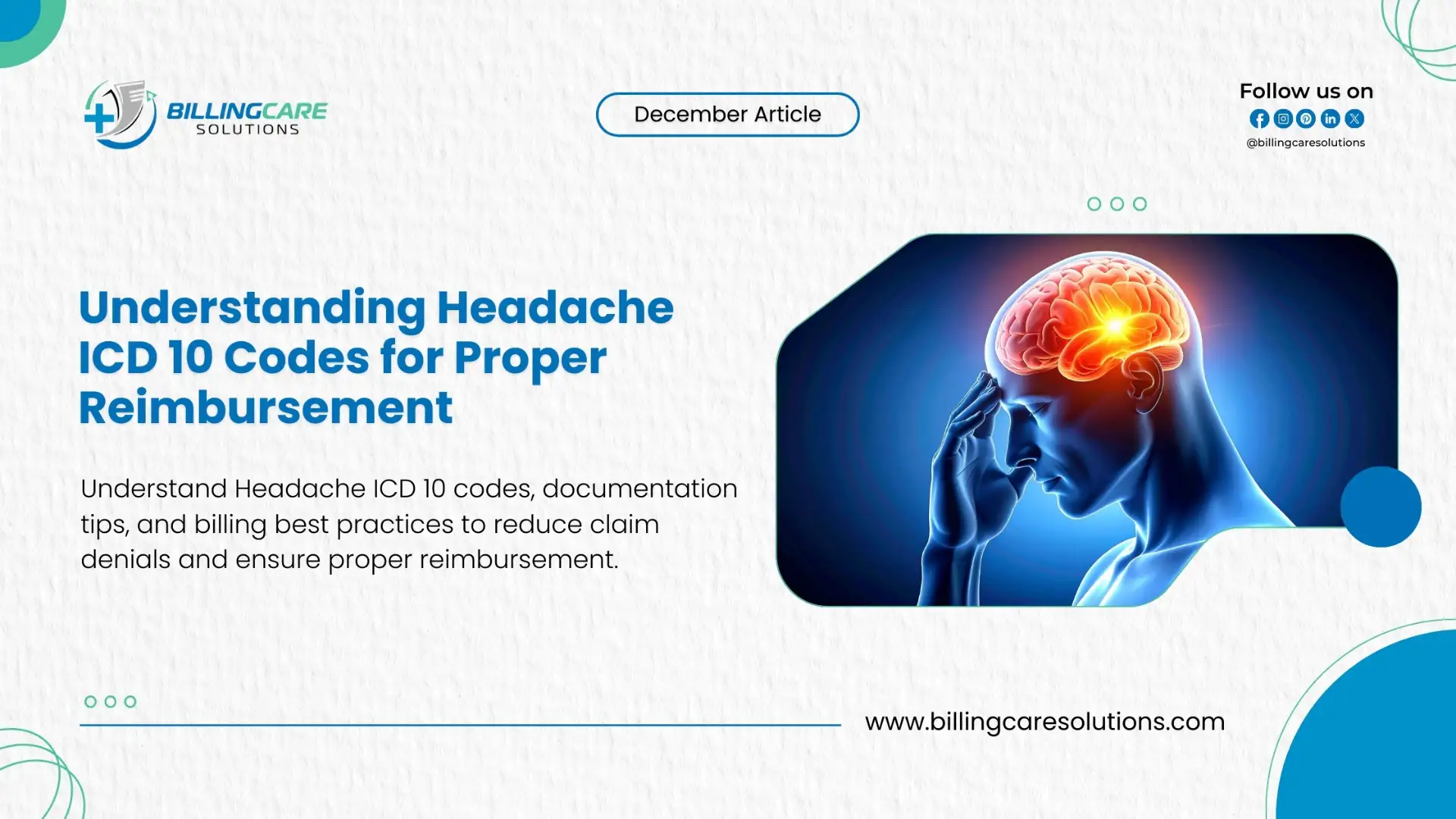
Headache falls in the category of most frequent healthcare complaints where millions of individuals across the globe complain. Headaches may be considered as minor; however, they may be occasional tension-type headaches, migraine, or cluster headaches which may cause a serious impact on everyday life. To healthcare providers, as well as billing teams, it is necessary to document and code headaches correctly. Applying proper codes of Headache ICD 10 will guarantee a good reimbursement, reduce claims denial, and adherence to medical codes.
This resource has brought an in-depth description of the types of headaches, the relevant ICD-10 codes, frequently made coding errors, and the most effective practices to achieve efficient billing.
What Is Headache ICD 10 and Why It Exists
The Headache ICD 10 structure of coding belongs to the International Classification of Diseases, Tenth Revision, Clinical Modification. ICD 10 was created in order to be more specific and accurate in the diagnosis of the medical conditions. Diagnoses of headache related diseases are divided into two major categories chapter six diseases of the Nervous System, and Chapter Eighteen Symptoms and Abnormal Clinical Findings.
Through these codes, the providers are able to share the condition of a patient with insurance payers. Effective application of Headache ICD 10 codes can be used in reporting of data, confirmation of medical necessity, and accuracy in reimbursements. In the absence of this standard system, claims processing in all healthcare organizations would be inconsistent and prone to errors.
Overview of Common Headache ICD 10 Categories
The ICD 10 codes of headache are grouped according to the type of headache and clinical presentation. The most popular ones are unspecified headaches, migraine headaches, tension type headaches and other headache syndromes.
Unspecified headache codes are symptomatic codes and are applied only in cases when there is no additional clinical information available. The migration of migraine is more complicated and has to be documented according to the severity, aura, and resistance to treatment. Tension headaches and cluster headaches will be under different categories, and they will have to be coded.
The knowledge of these categories assists medical coders to provide the most precise diagnosis according to the information that has been recorded by the provider.
Overview of Common Headache ICD 10 Categories
The R51 group encompasses headache diagnoses which are symptomatic and not established neurological disorders. The most utilized code in this category is R51.9 headache unspecified.
This code is not to be applied carelessly. Although it might be suitable when patients make their first visits, or when documentation is scarce, the long-term consequences of its use are claim denials. When an additional evaluation has taken place, the payers usually want the more definite diagnosis.
The use of R51.9 multiple times without the development of a particular type of headache could also affect diagnostic imaging or specialty referral reimbursement.
G44 Headache ICD 10 Codes for Other Headache Syndromes
The G44 group covers headache syndromes, which are non-migraine types. Such codes demand thorough description from the medical professional of the headache pattern, frequency, and cause.
Among the examples are pain of a tension type, cluster headaches, and the one occurring after the head trauma. The coders have to distinguish from the physician's notes whether the head pain is of the episodic or chronic type.
By choosing the right G44 Headache ICD 10 code, the healthcare providers make sure that their claims correspond to the treatment plans and the payers' requirements.
Migraine Headache ICD 10 Coding Guidelines
Migraine headaches are identified in the G43 category and need the utmost level of detail. These codes separate the cases of migraine with aura, without aura, intractable migraine, and status migrainosus.
Physicians are obliged to record the symptoms that go along with the disease, for example, vomiting, hypersensitivity to light, visual disturbances, and reaction to the treatment. Coders must not infer the features of a migraine from the provider's documentation if it is not explicitly stated.
Proper coding of migraine is a prerequisite for payment of advanced treatment and regular neurological care.
Importance of Accurate Headache ICD 10 Coding
Precise Headache ICD 10 coding has a significant impact on the revenue cycle results. Insurers use diagnosis codes to decide if the services given were necessary from a medical point of view and if they are included in the patient's policy. Wrong coding may lead to the lowering of payment or complete rejection of claims.
Insurance companies may also identify the frequent use of unspecified headache codes as unclear, which may lead to payer audits. Specific diagnosis codes indicate that the healthcare professional has documented the case well and done is the right treatment plan. So, when headache coding is accurate, healthcare providers lessen the risk of non compliance and at the same time, increase the rates of their claims getting approved.
Common Headache ICD 10 Coding Errors
Mistakes that are quite common in the area of headache coding have been the major contributor to reimbursement issues. Among the errors, the overuse of unspecified headache codes ranks as the most frequent one. Also, the problem of not changing the codes when the headaches become chronic or when a migraine diagnosis is confirmed is very significant.
Inconsistencies in coding from one visit to another may also result in the rejection of claims. The coders need to be sure that the development of the diagnosis is their accurate reflection in the different meetings.
Periodical training and audits are the ways that have been found to be effective in the prevention of these expensive mistakes.
Best Practices for Headache ICD 10 Coding
Successful headache coding starts with a team effort between the medical staff and the coding personnel. It is necessary to inform the doctors about the significance of thorough documentation. Meanwhile, coders need to be updated with the latest ICD 10 changes and follow the payer, specific guidelines.
Periodic internal audits are instrumental in recognizing the trends of undercoding as well as the excessive use of unspecified diagnoses. The use of coding checklists may also have an effect on the accuracy and the speed of the work.
Working with knowledgeable billing experts is another factor that compliance and revenue flow is getting better.
How Billing Care Solutions Supports Headache ICD 10 Coding
Billing Care Solutions offers precise medical billing and coding services that are in line with the healthcare practices of today. Our certified coders are the ones who guarantee the most accurate Headache ICD 10 selection as they base it on clinical documentation and payer requirements.
We are committed to lessening the denial of claims, speeding up the reimbursement process, and upholding the compliance standards. Our offensive audits and ongoing training provide a cushion for practices against the occurrence of the coding errors.
By teaming up with Billing Care Solutions, healthcare providers get a reliable partner who is committed to their success in the revenue cycle.
Final Thoughts on Headache ICD 10 Coding and Reimbursement
It is very important to know headache ICD 10 codes to get the right payment and work in accordance with the rules in the healthcare sector of today. Correct coding is an accurate reflection of the quality of the patient care and is supportive of the financial stability of medical practices.
Providers, through focusing on the correctness of documentation, specificity of the code, and continuous education, can decrease the number of denials and increase their efficiency in operations. Billing Care Solutions is still very much engaged in facilitating the ease coding challenges that healthcare organizations encounter and through this, they gain confidence and calmness.
