
Coronary Artery Disease ICD 10 Claim Documentation Guide
Accurate claim documentation for coronary artery disease ICD 10 codes. Learn billing tips, required records, and ways to prevent denials.
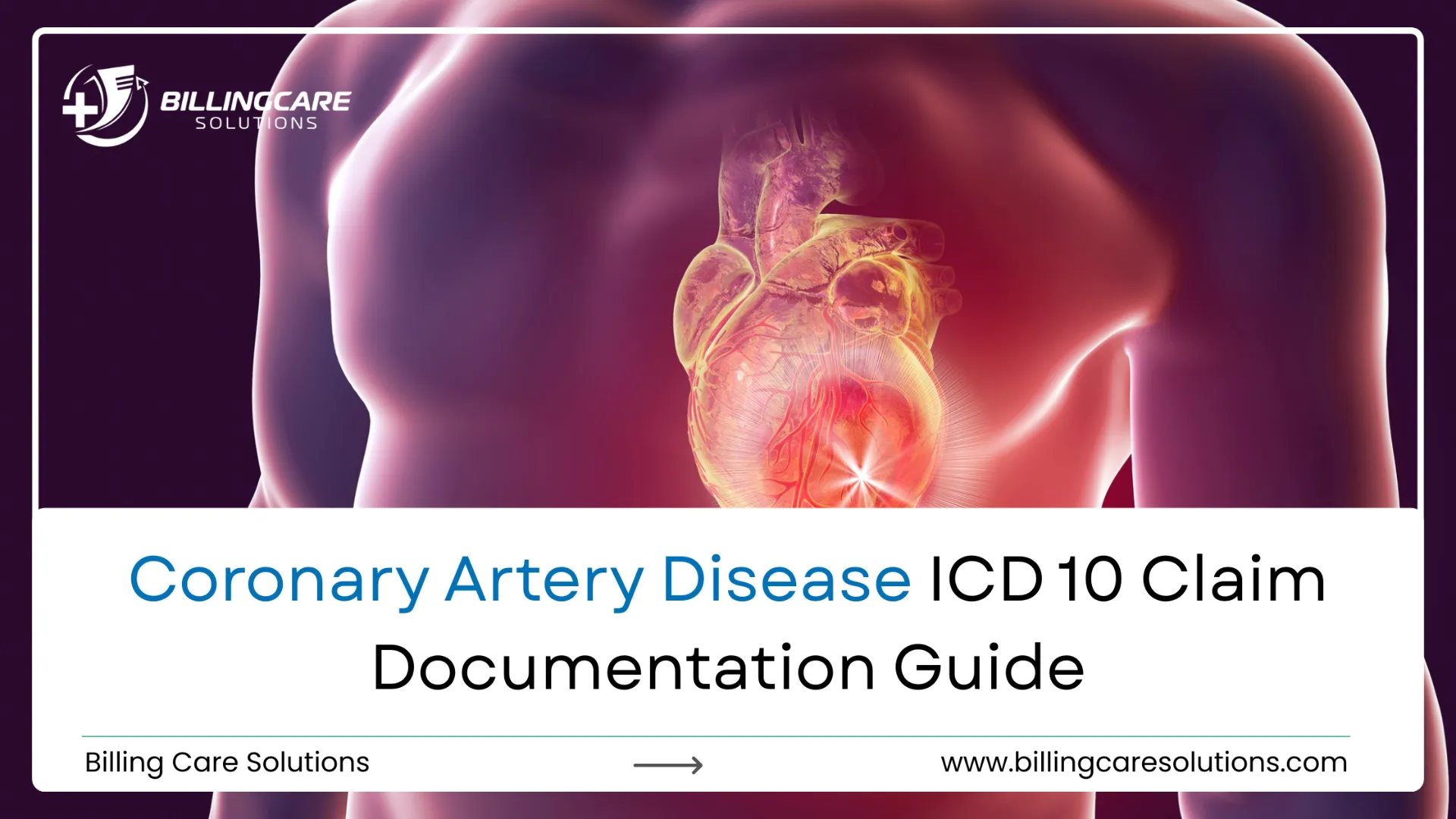
Coronary Artery Disease ICD 10 coding is a crucial part of the healthcare provision process that fulfills the requirement of the accurate reimbursement and adherence of billing regulations by the healthcare provider. This extensive manual will assist the medical billing practitioners to overcome the intricacies of CAD codes, documentation policies and how to submit claims in the best practices.
Understanding Coronary Artery Disease ICD 10 Codes
Coronary Artery Disease ICD 10 codes are mainly classified in the category of I25 under the International Classification of Diseases 10 th. These codes have given particular description of different kinds of coronary atherosclerosis and its related conditions. These codes should be selected properly and it is essential to proper medical billing and claim processing.
The ICD-10-CM coding system needs a comprehensive reporting to justify the choice of diagnosis code. In comparison with the former ICD-9 system, ICD-10 has more specificity and gives the option of better presenting the patient conditions and treatment needs.
Primary Coronary Artery Disease ICD 10 Codes
This is because the full range of available codes can only be used correctly when one understands what they are. The most frequently used Coronary Artery Disease ICD 10 codes include a detailed table that is presented below:
| ICD-10 Code | Description |
|---|---|
| I25.10 | Atherosclerotic heart disease of native coronary artery without angina pectoris |
| I25.110 | Atherosclerotic heart disease of native coronary artery with unstable angina pectoris |
| I25.111 | Atherosclerotic heart disease of native coronary artery with angina pectoris with documented spasm |
| I25.118 | Atherosclerotic heart disease of native coronary artery with other forms of angina pectoris |
| I25.119 | Atherosclerotic heart disease of native coronary artery with unspecified angina pectoris |
| I25.2 | Old myocardial infarction |
| I25.3 | Aneurysm of heart |
| I25.41 | Coronary artery aneurysm |
| I25.42 | Coronary artery dissection |
| I25.5 | Ischemic cardiomyopathy |
| I25.6 | Silent myocardial ischemia |
Coronary Artery Bypass Graft Related Codes
For patients who have undergone coronary artery bypass procedures, specific Coronary Artery Disease ICD 10 codes must be used:
| ICD-10 Code | Description |
|---|---|
| I25.700 | Atherosclerosis of coronary artery bypass graft(s), unspecified, with unstable angina pectoris |
| I25.701 | Atherosclerosis of coronary artery bypass graft(s), unspecified, with angina pectoris with documented spasm |
| I25.708 | Atherosclerosis of coronary artery bypass graft(s), unspecified, with other forms of angina pectoris |
| I25.709 | Atherosclerosis of coronary artery bypass graft(s), unspecified, with unspecified angina pectoris |
| I25.710 | Atherosclerosis of autologous vein coronary artery bypass graft(s) with unstable angina pectoris |
| I25.718 | Atherosclerosis of autologous vein coronary artery bypass graft(s) with other forms of angina pectoris |
| I25.719 | Atherosclerosis of autologous vein coronary artery bypass graft(s) with unspecified angina pectoris |
Native Coronary Artery Transplant Codes
| ICD-10 Code | Description |
|---|---|
| I25.750 | Atherosclerosis of native coronary artery of transplanted heart with unstable angina |
| I25.751 | Atherosclerosis of native coronary artery of transplanted heart with angina pectoris with documented spasm |
| I25.758 | Atherosclerosis of native coronary artery of transplanted heart with other forms of angina pectoris |
| I25.759 | Atherosclerosis of native coronary artery of transplanted heart with unspecified angina pectoris |
| I25.760 | Atherosclerosis of bypass graft of coronary artery of transplanted heart with unstable angina |
| I25.761 | Atherosclerosis of bypass graft of coronary artery of transplanted heart with angina pectoris with documented spasm |
Essential Documentation Requirements for Coronary Artery Disease ICD 10 Claims
Accurate Coronary Artery Disease ICD 10 coding is based upon proper documentation. To avoid rejection of claims, medical providers are required to make certain aspects of their clinical notes so as to help in the selection of codes.
Location and Vessel Involvement:
It should be clearly documented what are the affected coronary arteries. Indicate native coronary arteries, bypass grafts or transplanted heart vessels.
Absence or Presence of Angina:
The medical record is to indicate whether the patient suffers angina pectoris and the type of angina. This consists of unstable angina, angina, which has been recorded to have been caused by spasm, or other specified forms.
Severity and Stenosis Percentage:
In the presence of this, provide the percentage of stenosis in the affected vessels. Such information promotes healthcare needs on surgery and treatment.
Common Coding Mistakes to Avoid
In billing Coronary Artery Disease ICD 10, billing professionals ought to be conscious of common mistakes that can result in denial of claims or audit results.
Unspecified Code Usage:
Unspecified codes should not be used where documentation is more specific on code choice. Examine clinical notes in detail to obtain all possible information regarding the condition of the patient.
Missing Laterality or Location:
Certain codes need to be specified of what vessels are affected. Make sure that it is documented with respect to the coronary arteries involved.
Incorrect Sequencing:
The chief diagnosis must be a representation of the primary cause of the encounter. CAD should be the first diagnosis when it becomes an object of treatment.
Overlooking Combination Codes:
ICD-10 has combination codes which represent the atherosclerosis and the type of angina in one code. It is not correct to use different codes when a combination code is in existence.
Failure to Update Codes:
In situations where the condition of a patient has changed, e.g., the development of angina in an asymptomatic patient, the codes have to be revised to the updated situation.
Clinical Validation and Query Process
Coronary Artery Disease ICD 10 Medical coders ought to adopt a methodical approach of corroborating clinical validation on the coding of Coronary Artery Disease. Code assignment should also not be made final before queries to the healthcare provider are initiated, especially when documentation is not clearly understood or complete.
Good query questions must be focused and offer a medical record background. Using the previous examples, when a progress note states coronary disease but nothing about whether or not the patient has angina, request the provider to check whether the patient has the symptoms of angina.
Coding errors, as well as denial of claims can be diminished significantly through documentation improvement efforts. Frequent training of clinical personnel concerning the documentation requirements can be used to make sure that medical records have the required details to assign the correct Coronary Artery Disease ICD 10 codes.
Linking Diagnosis Codes with Procedures
It is necessary to properly code the diagnosis codes and the procedure codes of Coronary Artery Disease ICD 10 to receive claim approval. These linkages are reviewed by the insurance payers in determining medical necessity of services rendered.
When making billing of diagnostic procedures, including cardiac catheterization, stress tests, or coronary angiography, make sure that the diagnosis code justifies the procedure. On the same note, interventional procedures such as angioplasty or stent placement must have suitable CAD codes which warrant the treatment.
Compliance Considerations for Billing
Healthcare organizations should ensure that they are very adherent to the coding guidelines and the payer requirements in making Coronary Artery Disease ICD 10 claims. An annual update of the coding guidelines published by Centers for Medicare and Medicaid Services (CMS) and the American Hospital Association has to be adhered to.
Periodic audit of coded claims assists in determining the trends regarding errors and areas that can be improved. Certain guidelines on cardiology claims review are to be employed in internal compliance programs, as cardiovascular coding is complicated.
Training of the staff needs to be a continuous process that would not only involve code assignments but also documentation requirements, payer-specific rules, or changes in the coding guidance. Cardiology certified professional coders can be of good asset in this area.
Best Practices for Claim Submission
Coronary Artery Disease ICD 10 claim processing involves detailing of the billing cycle. Adopt pre-submission claim scrubbing which will detect any errors that may exist in the claims before reaching payers.
Ensure that all the modifiers necessary are added where necessary. Bilateral procedures or repeat procedures can be illustrated as such that may need to have particular modifiers in order to be properly reimbursed.
Have good channels of communication among the coding personnel, clinical personnel, and billing personnel. This concurrence will allow resolving questions regarding documentation or coding in time and avoid delays in submitting claims.
Patterns of claim denial on Track claims associated with Coronary Artery Disease ICD 10 codes. Denial reasons aid in the analysis of systemic problems that may be solved by enhancing documentation of the problem or coding the problem.
Conclusion:
The process of mastering Coronary Artery Disease ICD 10 coding implies strong awareness of the categories of the code, full understanding of documentation standards and continuous learning. Through adhering to the instructions detailed in this guide, the billing professionals will be able to enhance the accuracy of the coding, minimize the claim refusals, and guarantee proper reimbursement of the cardiovascular services.
Proper payment is not the only benefit of correct Coronary Artery Disease ICD 10 coding which has led to enhanced patient care due to correct records of the severity of the disease and treatment history. To be successful in cardiovascular billing, investing in coder education, well-established documentation practices, and compliance reviews on a regular basis will put your organization in a successful position.
At Billing Care Solutions, we are business experts dealing with medical billing and coding challenges that healthcare providers face. Our team of certified professionals has been working with Coronary Artery Disease ICD 10 coding and offering assistance to your practice to improve the accuracy, drops in denials, and revenue maximization. Billing care solutions can provide you with the detailed billing services, code audit, or staff training, but the services are in accordance to your unique requirements and the needs of the compliance to the regulatory requirements.
