
Credentialing in Medical Billing Guide for NYC Healthcare Offices
A practical guide to credentialing in medical billing for NYC healthcare offices. Boost efficiency, reduce errors, and maximize claims reimbursement.
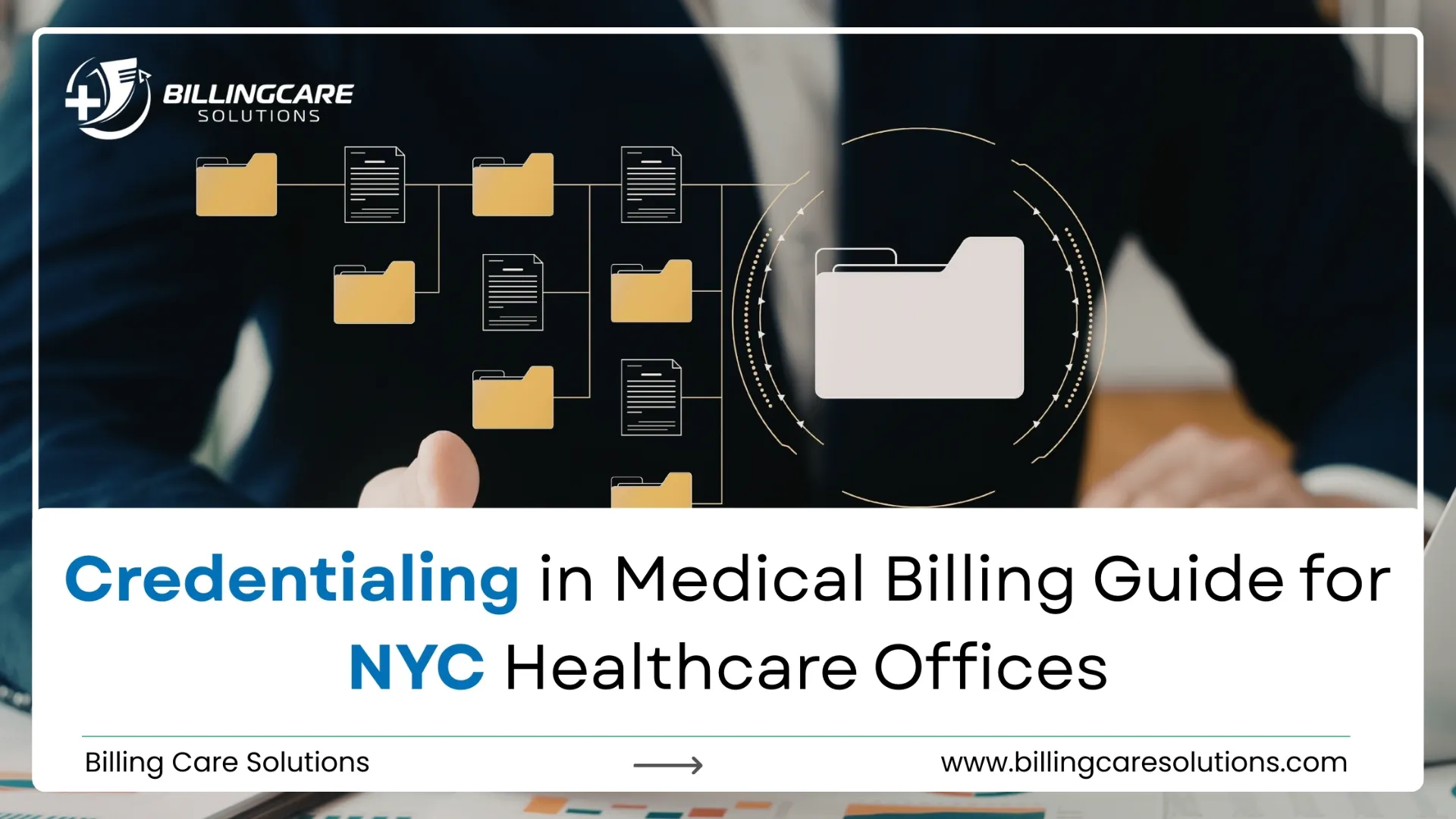
Medical Credentialing is a very essential procedure to the healthcare offices of New York City. Doctors will not be able to get payments through insurance companies unless they are credentialed properly and have offered services in a proper manner.
Rules governing payers, complicated laws and intense competition are compelling practices in NYC, and credentialing is a basis of financial stability.
This reference will define Credentialing in Medical Billing in a straightforward and practical manner, as the healthcare offices will see how this process works, obstacles, and the best practices to succeed.
Understanding Credentialing in Medical Billing
Credentialing in Medical Billing is the process of confirmation of the qualifications, education, licenses and professional history of a healthcare provider. Credentialing is a technique employed by insurance payers to ensure that providers are conforming to their standards so that they may make claims. It is done to ensure safety of patients, regulations, and proper reimbursements.
Credentialing is most of the times mixed with enrollment though the two differ. Credentialing concentrates on the credentialing of providers, whereas enrollment connects the approved providers with the payer billing systems. The two steps are mandatory with credentialing being done first.
Credentialing is among the main stakeholders that concern providers, healthcare offices, insurance companies, and regulatory agencies.
Importance of Credentialing in Medical Billing for NYC Healthcare Offices
Medical Credentialing would be particularly valuable to the healthcare offices in NYC because of the dense payer environment in the city. In many cases, providers are contracted with several insurance plans, such as the Medicaid managed care organizations and the commercial payers. All payers contain certain credentialing requirements that are required to be adhered to.
Failure to finalize Credentialing as it is done correctly may cause stalled payments, payment denials, or even revenue loss. Finally, NYC practices should also be in adherence to state and federal regulations, thus credentialing should become a priority of compliance.
Effective Credentialing of Medical Billing assists practices in developing payer confidence, lessening audit, and ensuring continuous billing activities.
Types of Credentialing in Medical Billing
Medical Credentialing has various types depending on the provider and the structure of the practice. Provider credentialing is intended to cover physicians, nurse practitioners, physician assistants, and other licensed professionals. Facility credentialing is applied to clinics, group and diagnostic centers.
The other critical form of Credentialing in Medical Billing is re-credentialing. The majority of payers have providers to recredit after every two or three years. Recredentialing also ensures that licenses, certifications and insurance covers are up to date. Failure to meet re-credentialing deadlines may lead to claims being rejected or removed temporarily by payers.
Step by Step Credentialing in Medical Billing Process
There is the process of Credentialing which starts with gathering provider information. These are education history, licenses, board certifications, malpractice insurance and work experience. At this stage, accuracy is very critical because any mistake may result in delays.
The second one is the development and upkeep of CAQH profile. The majority of payers have providers fill in CAQH as a part of Credentialing in Medical Billing. The profile should be up to date and certified on a regular basis. The payer applications are then made with documentation after CAQH is finished.
Credentialing in Medical Billing involves follow up which is a vital component. Additional information or clarification may be sought by the payers. The turnaround time is different, in most cases it can take sixty to a hundred and twenty days. Making submissions and responses trackable enables avoidance of unnecessary delays and prompt approvals.
Common Challenges in Credentialing in Medical Billing
There are a number of challenges that face the NYC healthcare offices in credentialing in Medical Billing. One of the most typical problems is incomplete or obsolete documentation. Approaches may be delayed through the absence of licenses, expired malpractice insurance, and unstable employment history.
Credentialing is also a complicated process in Medical Billing due to payer specific variations. The insurance companies vary in form, time and conditions. It is further complicated by the issue of credentialing various providers and locations. In the absence of an organized system, healthcare offices may lose revenue because of credentialing loopholes.
Best Practices for Credentialing in Medical Billing
Credentialing in Medical Billing can be made more efficient, by following best practices. Placing files in a central system will provide speed in accessing and precision. The maintenance of provider information is an important step to ensure that delays are avoided during the initial credentialing and re-credentialing.
Another best practice is proactive follow up by the insurance payers. Frequent communication allows detecting problems timely and acceleration of approvals. Consistency and accountability are enhanced in Credentialing in Medical Billing by assigning dedicated personnel or hiring skilled individuals in the field of Billing.
Credentialing in Medical Billing and Revenue Cycle Management
Medical credentialing has a direct connection with revenue cycle management. Claims that are received prior to the time of credentialing approval are usually rejected, which means that they miss revenue or spend time appealing. Effective credentialing makes the claims run smoothly at the very beginning.
Using Credentialing in the revenue cycle processes may help decrease denials and increase cash flow in healthcare offices. Credentialed providers enable the billing teams to concentrate on accuracy of coding, submission of bills and collections other than rework due to credentialing errors.
Outsourcing Credentialing in Medical Billing Services
Credentialing in Medical Billing is a complex process that is preferred by many healthcare offices in NYC. The practice with limited staff or high turnover in the provider is good as it can be outsourced. The services of professional credentialing introduce professionalism, insurance relations, and effective processes.
In outsourcing Credentialing, the practices should select the partners that have the NYC experience in the payer. An effective credentialing partner will keep time, handle follow ups and compliance. This enables the healthcare offices to concentrate on patient care and still remain in the business.
How Billing Care Solutions Supports Credentialing in Medical Billing?
Billing Care Solutions offers the full-scale Credentialing support in accordance with the NYC healthcare offices. Their department deals with provider and facility credentialing, CAQH maintenance, and payment communications. Having experience with local and national players would result in better smooth approvals.
Credentialing is also being incorporated within Billing Care Solutions along with greater billing and coding services. This method will minimize reimbursements and decrease claim denials. They assist practices in keeping the cash flowing regularly by managing documentation, follow ups and compliance requirements.
Credentialing in Medical Billing Compliance and Audits
Credentialing in Medical Billing deals with compliance to a large extent. Providers are obliged to comply with the standards and required regulations of payers. Proper documentation and updates help to minimize the chances of audit and punishment.
Audits are also prepared when Credentialing in medical billing records are in good order. Approvals, licenses and correspondence should be kept in practices. Remaining in compliance will defend reimbursements and promote long term relationships with payers.
Conclusion:
Medical Billing is a qualification that all healthcare offices in NYC must have. It guarantees adherence, promotes proper reimbursements as well as enhances revenue cycle performance. In the case of initial applications to re-credentialing, all the stages must be addressed carefully and proactively.
With the best practices and the professional assistance, healthcare offices may easily streamline the Credentialing and minimize the financial risk. By collaborating with a reputable firm such as Billing Care Solutions practices can concentrate on patients and still have good billing functions.
