
Understanding Prediabetes ICD 10 Codes in Medical Billing
MClear guidance on prediabetes ICD 10 codes to support proper documentation, reduce billing errors, and prevent claim denials.
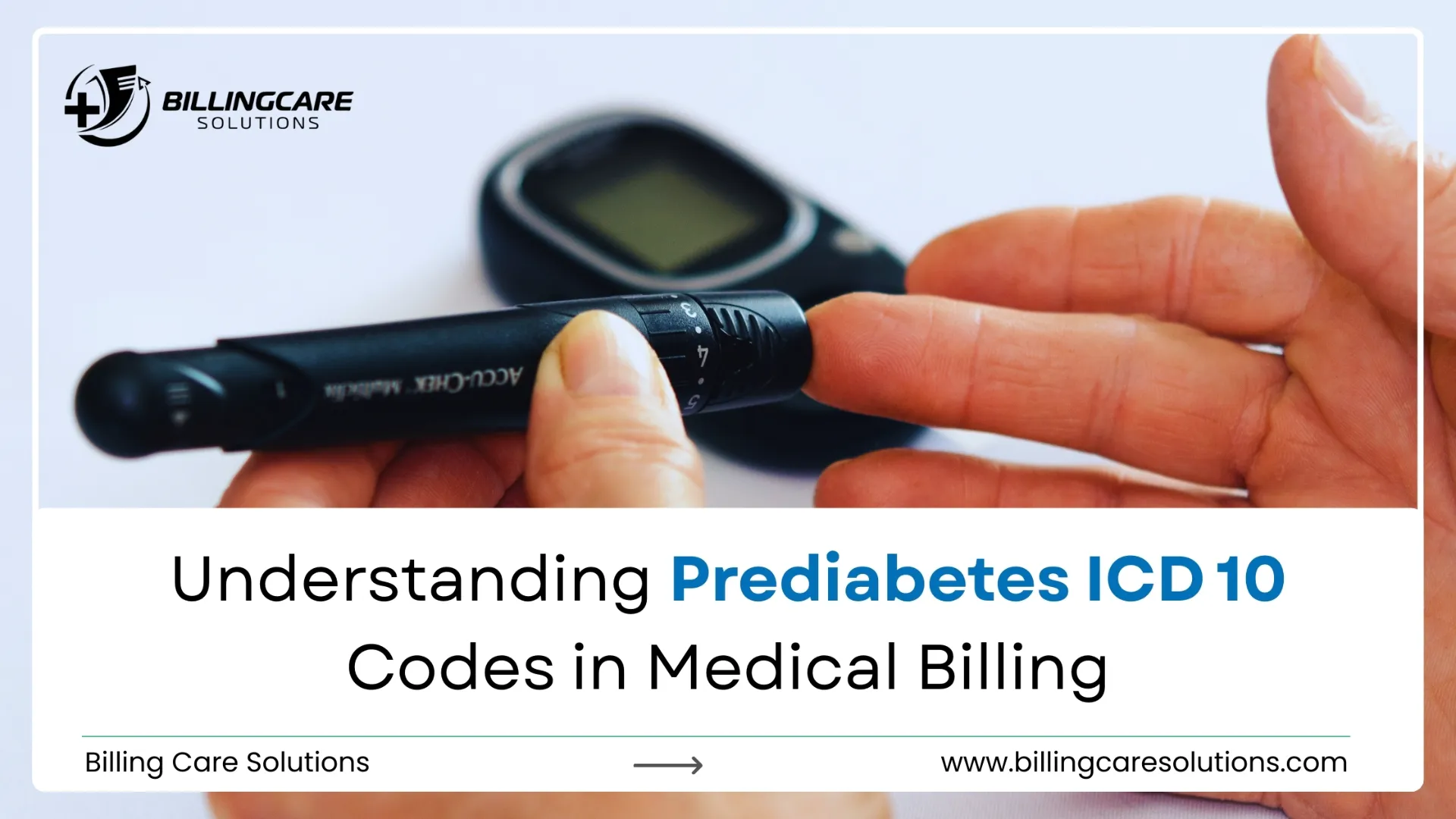
Prediabetes has emerged as one of the emerging health issues in the United States with over 98 million adults being diagnosed with the condition as per the latest CDC statistics. To health practitioners and medical billing professionals, the correct coding of prediabetes diagnosis is vital in ensuring correct reimbursement, monitoring patient care, and compliance with insurance policies. Misunderstanding of the appropriate Prediabetes ICD 10 codes would result in smooth medical billing operations and avoidance of claims rejection.
What is Prediabetes?
Prediabetes is a severe illness that occurs when the level of sugar in the bloodstream is elevated; however, it is not so high that the disease is defined as type 2 diabetes. Such a condition is a serious danger indicative that a patient is highly susceptible to developing full-blown diabetes in the coming few years unless he or she makes lifestyle modifications or receives medical attention.
Doctors identify prediabetes using a variety of tests such as in fasting plasma glucose, oral glucose tolerance and hemoglobin A1C tests. In case the level of sugar in the blood in these tests is within certain levels, the healthcare providers are required to record the diagnosis under the correct Prediabetes ICD 10 code to use in billing and medical records.
Primary Prediabetes ICD 10 Code
R73.03 is the primary code in diagnosing prediabetes in medical billing. The code particularly specifies prediabetes and falls under the umbrella category of the increased level of blood glucose. This code is employed by healthcare providers who have test results of a patient and the patient is diagnosed with prediabetes but not with diabetes.
| ICD-10 Code | Description | Clinical Application |
|---|---|---|
| R73.03 | Prediabetes | Primary code for confirmed prediabetes diagnosis |
| R73.09 | Other abnormal glucose | Used for glucose abnormalities not classified elsewhere |
| R73.9 | Hyperglycemia, unspecified | Non-specific elevated blood glucose without confirmed diagnosis |
| Z83.3 | Family history of diabetes mellitus | Supporting code for patients with diabetes family history |
| Z86.32 | Personal history of gestational diabetes | Relevant for women with previous gestational diabetes |
Related ICD 10 Codes for Blood Glucose Monitoring
| ICD-10 Code | Description | Usage Context |
|---|---|---|
| R73.01 | Impaired fasting glucose | Fasting blood glucose between 100–125 mg/dL |
| R73.02 | Impaired glucose tolerance test | Abnormal results on oral glucose tolerance test |
| E11.65 | Type 2 diabetes with hyperglycemia | When prediabetes progresses to diabetes |
| Z13.1 | Encounter for screening for diabetes mellitus | Routine diabetes screening visits |
Clinical Criteria for Prediabetes ICD 10 Coding
Medical billing experts should have the clinical requirements of when to use the Prediabetes ICD 10 code R73.03. According to American Diabetes Association, prediabetes is determined by particular blood glucose levels:
Fasting Plasma glucose 100-125mg/dL Oral glucose tolerance test 140-199mg/dL(2-hour plasma glucose) Hemoglobin A1C: 5.7% to 6.4%
Laboratory results within such ranges allow healthcare providers to be sure that they can use the R73.03 code. The results of the test used are to be clearly documented stating what test was done and what were the actual outcomes to prove the diagnosis.
Documentation Requirements for Prediabetes Billing
Successful medical billing in prediabetes diagnosis is based on proper documentation. To ensure that healthcare providers have comprehensive records, they should have:
The nature of the diagnostic test done (fasting glucose, A1C or glucose tolerance test), the exact numerical results of the test, date of test and interpretation of results by the physician. Also, any risk factors, i.e. obesity, family history, or sedentary lifestyle should be documented, as well as the treatment plan or preventive measures discussed with the patient.
The insurance companies are thorough in reviewing prediabetes claims and therefore full documentation safeguards the providers against claims denials and medical necessity of preventive measures such as nutrition counseling or diabetes prevention programs.
Common Billing Challenges with Prediabetes ICD 10
The medical billing practitioners are often faced with a number of challenges in handling prediabetes claims. The awareness of these barriers will assist practices to create plans that reduce the nullification and postponements.
The distinction between screening visits and a diagnostic visit is one of the important challenges. The insurance cover will be entirely different based on the visiting to the hospital as a routine screening visit or a diagnostic assessment of the symptoms. The wrong encounter code and Prediabetes ICD 10 code may lead to rejection of the claim.
The other problem that is common is the use of old codes by providers. ICD 10 system is constantly being updated every year and code changes should be kept up to date. Although the standard prediabetes code is still R73.03, coders still need to confirm the current guidelines on a billing cycle by billing cycle basis.
Another challenge is the medical necessity documentation. To make the insurance cover the prediabetes testing and further monitoring, it is needed to produce clear evidence that the test and further monitoring are medically necessary. In the absence of documentation about the notification of risk factors against frequency of testing, claims can be uncovered as not medically necessary.
Prediabetes Prevention Program Billing
Diabetes prevention programs now are encompassed by Medicare and numerous private insurance schemes to cover patients with prediabetes diagnosis. These aggressive lifestyle interventions programs involve special coding processes.
A provider should use the code R73.03 of the Prediabetes ICD 10 code as the primary diagnosis when billing services of diabetes prevention programs. Also, there are HCPCS codes, which are specific to particular components of the programs such as initial assessments, scheduled coaching sessions, and rewards on achievement.
These programs are covered under Medicare provided that patients meet the minimum eligibility requirements such as BMI of 25 (23 in case of Asian Americans) and prediabetes diagnosis within the last year. These preventive services should be reimbursed properly and this is achieved through proper coding.
Modifier Usage with Prediabetes ICD 10
Medical coders should add some modifiers to procedure codes when they are coding prediabetes-related services in some clinical scenarios. Although the diagnosis code R73.03 does not necessarily receive modifiers, the procedure codes are involved.
Considering an example, moderator 91 (repeat clinical diagnostic laboratory test) can be required when conducting several glucose tests on one day. In cases where a preventive service is billed which transitions into a diagnostic evaluation, the modifier 25 is used to differentiate between the identifiable evaluation and management service that occurred on the same encounter.
The knowledge of the application of modifiers at the right time and place will help avoid the rejection of claims and provide the provider with the necessary compensation upon the delivery of the services.
Transition from Prediabetes to Diabetes Coding
Medical billing specialists should be aware of the time when the condition of a patient is transformed into diabetes and a code change takes place. This shift largely affects the billing processes, treatment, and insurance.
Providers should change the code of R73.03 to the correct code of diabetes, which is usually E11.9 type 2 diabetes without complications, when the blood glucose levels do not meet the requirements of diabetes (fasting glucose 126 mg/dL or higher, A1C 6.5% or higher, or 2-hour glucose tolerance test 200 mg/dL or higher).
This change in coding does not only change the codes of diagnosis but also has an impact on the coverage of diabetic management supplies, medication and education services. The proper recording of the transition between prediabetes and diabetes will guard the practices against the results of the audit and the patients will be covered with the right care.
Best Practice in Prediabetes ICD 10 Coding
Medical billing of prediabetes can only be successful when best practices are applied across the revenue cycle. Healthcare organizations are to develop procedures that guarantee unity, correct coding.
First, train clinical and billing employees on prediabetes diagnosis criteria and coding needs continuously. Team education is conducted regularly to inform teams about code modifications and specific payer guidelines.
Second, carry out coding audits, which are targeted at endocrine and metabolic conditions. Periodic monitoring of prediabetes claims helps to determine trends in the occurrence of errors before it becomes institutionalized and a problem to revenue.
Third, create detailed documentation templates that will remind providers to enter all the appropriate details needed to bill prediabetes. Specific test results, risk factors, and treatment plans should be a part of the templates.
Fourth, ensure good communication between the clinical staff and the billing personnel. In cases where doubts are raised on the selection of the appropriate code, face to face communication guarantees effective coding choices.
Fifth, keep up on payer-specific prediabetes coverage. Medical necessities requirement and covered service may differ based on the insurance company.
Impact of Accurate Prediabetes Coding on Healthcare
In addition to the financial consequences, correct Prediabetes ICD 10 coding has larger healthcare goals. Effective coding helps in surveillance of the health of the people, accuracy of research data and health management in populations.
By utilizing the proper prediabetes codes routinely by healthcare providers, the system can assist the public health officials in monitoring disease prevalence, the at-risk populations, as well as assist in the effective allocation of resources. This information affects the policy choices regarding preventive health programs and healthcare financing priorities.
When it comes to the individual practices, proper coding reinforces quality reporting measure and value-based care programs. Several other payment models provide diabetes prevention as quality measure and adequate prediabetes diagnosis and coding reflects dedication to preventive care.
Staying Current with Prediabetes Coding Changes
Medical billing constantly changes, including annual ICD 10 updates, shift in payer policies and new clinical guidelines. To remain up to date, one has to work hard and keep learning.
The professional associations such as the American Academy of Professional Coders and the American Health Information Management Association offer the resources, education, and communication regarding the coding modifications. The membership of these organizations provides billing professionals with access to professional advice and peer support groups.
Also, by subscribing to Medicare and other significant commercial payers updates, practices can be informed of policy changes through a timely manner regarding prediabetes billing. A lot of payers provide provider newsletters, webinars, and online information about the coverage and coding requirements.
Why Choose Billing Care Solutions
Billing Care Solutions is well aware of the intricacies of medical billing and the vital significance of proper coding of such diseases as prediabetes. Our certified medical billing professionals will be able to offer you a long history of experience in coding endocrine and metabolic disorders, which will guarantee that your practice will receive the highest level of reimbursement, in addition to adhering fully to the existing laws.
We keep up with coding modifications and payer policy modifications, therefore, you do not. Our full-service billing solution involved professional coding analysis, submission, and follow-up of claims, handling of denials, and detailed reporting that would provide your total visibility on the performance of your revenue cycle. When you leave Billing Care Solutions with your medical billing, you will be able to concentrate on what is important, which is giving your patients excellent services. We have a long history of saving claim rejections and shortening payment cycles, which makes us the recommended choice of healthcare practice to streamline its billing process and increase its bottom line.
Conclusion:
A correct prediabetes ICD-10 coding using R73.03 as a primary code is required to code and bill effectively and report quality outcomes. The key to becoming successful is well documented, familiarity with clinical requirements, keeping abreast of coding updates, and adherence to best practice in the revenue cycle.
With the increase of prediabetes conditions and the emphasis on prevention care, accurate coding facilitates not only financial sustainability, but also on health outcomes in the population. The practices are more successful in the sphere of fees-to-service and value-based care, because of their investing practices into training, well-built systems, and expert billing guidance. The accuracy should be the priority to guarantee adequate reimbursement, compliance, and better patient outcomes due to disease tracking and preventive care.
