

Hyperlipidemia ICD-10 Coding Guide for Accurate Billing Practices
A clear guide to Hyperlipidemia ICD-10 coding, documentation tips, and billing accuracy to reduce denials and improve reimbursement.
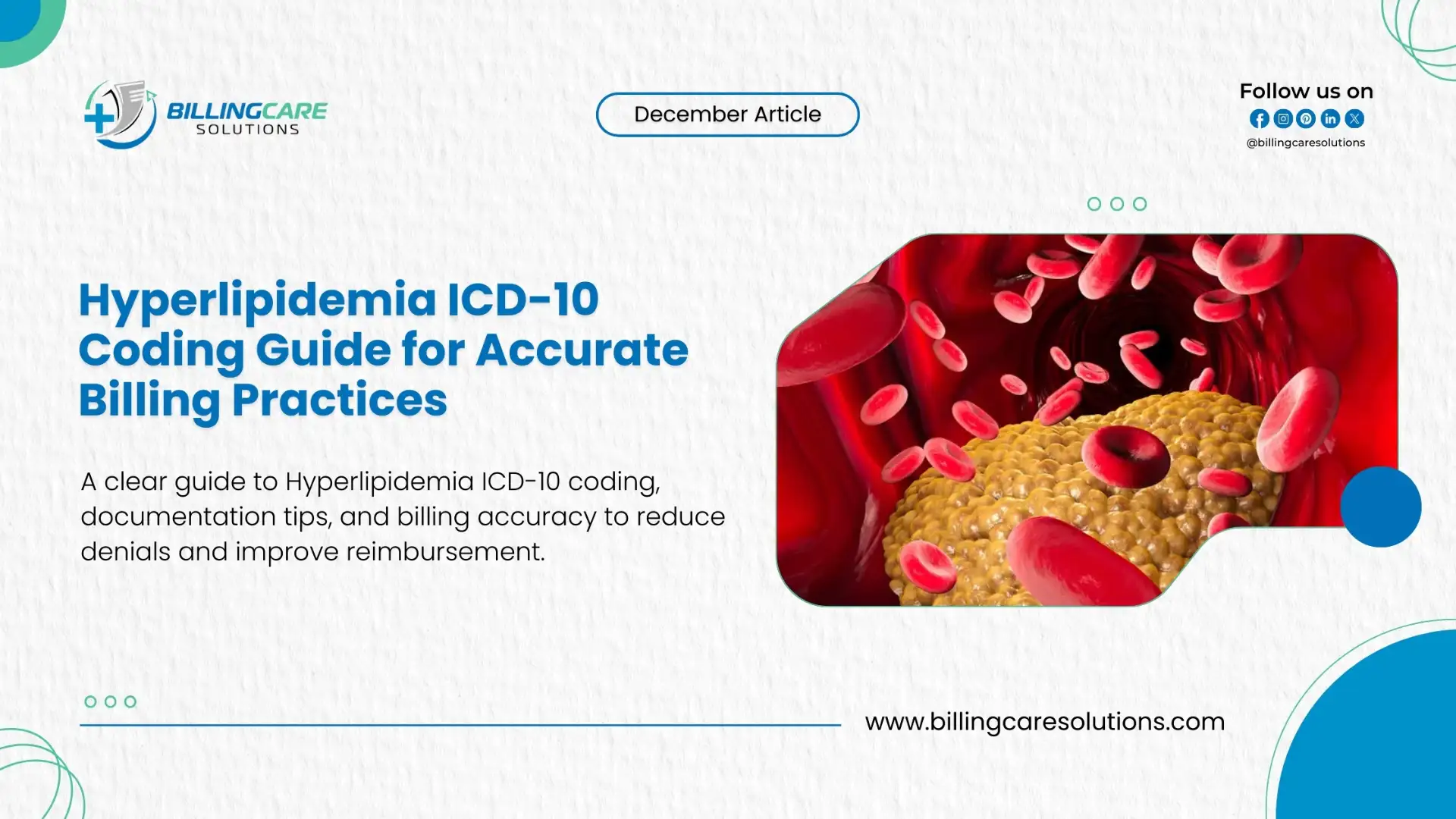
Hyperlipidemia is often called high cholesterol and, it is one of the most challenging problems that have a major impact on a million lives all over the globe. Correct coding of hyperlipidemia is very important for billing, reimbursement, and medical practice compliance.
Such a guide as this one is a complete lesson of the hyperlipidemia ICD-10 code, the most effective ways of writing the report, and hints in order to be free from errors.
Understanding Hyperlipidemia and Its Clinical Importance
Hyperlipidemia occurs when there is an excessive amount of lipids, including cholesterol and triglycerides, in the blood. These elevated lipid levels can increase the risk of cardiovascular diseases such as heart attack, stroke, and atherosclerosis. Healthcare providers often diagnose hyperlipidemia during routine blood tests, and timely treatment is essential to prevent complications.
From a medical billing perspective, accurate documentation of hyperlipidemia is vital. Coders rely on precise clinical details, including the type of hyperlipidemia, presence of associated conditions, and treatment plans, to assign the correct ICD-10 code. Incorrect coding can lead to claim denials, delayed reimbursements, and potential compliance issues.
Why Accurate Hyperlipidemia ICD-10 Coding Matters
Precise Hyperlipidemia ICD-10 coding is essentially linked to the initial acceptance of the claim, the flow of the reimbursement, and conformity to the regulations. Insurers use the exact diagnostic codes as a basis for medical necessity verification and for deciding the coverage of drugs, lab testing, and the follow-up visits. If the coding is deficient in detail or is not in agreement with the provider’s documentation, then the chances of the claims being rejected or postponed are increased. Regular and correct coding is a kind of insurance for practices when they are audited and it also helps in the reporting of population health data which is used by payers and regulatory agencies.
Hyperlipidemia ICD-10 Codes Explained
| ICD-10 Code | Description | When to Use |
|---|---|---|
| E78.0 | Pure hypercholesterolemia | Use when elevated cholesterol is documented without elevated triglycerides. |
| E78.1 | Pure hyperglyceridemia | Use when elevated triglycerides are documented without elevated cholesterol. |
| E78.2 | Mixed hyperlipidemia | Use when both cholesterol and triglycerides are elevated. |
| E78.4 | Other hyperlipidemia | Use for hyperlipidemia types not classified as pure or mixed. |
| E78.5 | Hyperlipidemia, unspecified | Use only when hyperlipidemia is documented but the type is not specified. |
| E78.6 | Lipoprotein metabolism disorder, unspecified | Use when a lipoprotein metabolism disorder is diagnosed without further detail. |
| E78.8 | Other specified disorders of lipoprotein metabolism | Use when a specific lipoprotein metabolism disorder is documented but does not have a unique code. |
| E78.9 | Disorder of lipoprotein metabolism, unspecified | Use only when a disorder is noted but no further clinical details are available. |
Documentation Tips for Accurate Hyperlipidemia Coding
Well-organized documentation is the base of correct Hyperlipidemia ICD-10 coding. The notes of the provider must be able to show the kind of lipid disorder that is confirmed by the lab results, additionally any risk factors or co-morbidities like diabetes or hypertension should be mentioned. The record of the medical history should also have the treatment decisions, i.e. medication prescriptions and lifestyle counseling. In case the documentation is thorough and detailed, coders are able to make exact code assignments which mirror the patient’s state and are a lawful basis for the services invoiced.
Common Coding Challenges in Hyperlipidemia
Overuse of unspecified diagnosis codes is one of the most frequent problems in hyperlipidemia coding, which occurs as a result of provider documentation that is vague or incomplete. Situations such as missing lab values, ambiguous diagnoses, or not differentiating between cholesterol and triglyceride abnormalities may cause wrong coding. Moreover, since hyperlipidemia is generally treated in combination with several other chronic conditions, the neglect of proper documentation and coding of these relationships may have an effect on reimbursement and risk adjustment. Fixing this problem necessitates cooperation between the medical providers and the coding department personnel.
Best Practices for Hyperlipidemia ICD-10 Coding
Using the most effective measures for Hyperlipidemia ICD-10 coding leads to better billing precision and less administrative work. It is the responsibility of coders to choose the detailed diagnosis that is backed up by the medical record and also make sure that lab results correspond to the condition that has been documented. Being aware of ICD-10 changes and also the directives given by the payers is equally significant. Frequent internal audits and provider education may also help to elevate the quality of documentation and the uniformity of coding throughout the practice.
Impact of Accurate Coding on Billing and Reimbursement
Revenue cycle management can significantly benefit from the precise recording of hyperlipidemia codes. Insurance companies are able to process requests that are free from errors and are accompanied by the correct ICD-10 codes more quickly and have a lower chance of them being set for a review. Besides, the right coding helps to maintain the care standard as it records patient health in an accurate way across different visits. In the long run, steady coding precision leads to fewer denials, less work of correcting mistakes, and gives practices the opportunity to be in line with the requirements of payers and regulatory bodies.
Coding Hyperlipidemia for Special and Complex Cases
Certain patients may have high lipid levels as a condition that is secondary to their other diagnoses, for example, they may have endocrine disorders or renal diseases. When this happens, it is necessary that the documentation shows not only the lipid disorder but also the source of the problem. Coding personnel need to ascertain that any and all diagnosis that have been identified are coded in compliance with ICD-10 conventions and the requirements of the payers. The correct processing of complicated cases leads to the precision of claims and hence, it is a great help in facilitating the coverage of the right treatment for those patients who suffer from multiple chronic conditions.
Conclusion:
Hyperlipidemia ICD-10 coding is essential to precise medical billing and the continuation of a practice over time. If the clinical documentation specifies the different types of lipid disorders and coders use the correct diagnosis codes, the practices will have fewer denials and better reimbursement results. In order to keep the coding accurate, it is necessary to constantly pay attention to the quality of the documentation, changes in guidelines, and communication between doctors and the billing department. As a result of hyperlipidemia coding, the practice can be financially sound and offer good patient care at the same time.
Hyperlipidemia is often called high cholesterol and, it is one of the most challenging problems that have a major impact on a million lives all over the globe. Correct coding of hyperlipidemia is very important for billing, reimbursement, and medical practice compliance.
Such a guide as this one is a complete lesson of the hyperlipidemia ICD-10 code, the most effective ways of writing the report, and hints in order to be free from errors.
Understanding Hyperlipidemia and Its Clinical Importance
Hyperlipidemia occurs when there is an excessive amount of lipids, including cholesterol and triglycerides, in the blood. These elevated lipid levels can increase the risk of cardiovascular diseases such as heart attack, stroke, and atherosclerosis. Healthcare providers often diagnose hyperlipidemia during routine blood tests, and timely treatment is essential to prevent complications.
Every diagnosis is associated with a particular Hyperlipidemia ICD-10. Selecting an appropriate ICD 10 code influences coding efficiency as well as revenue generation. An accurate icd 10 code for hyperlipidemia indicates the actual disease state. It justifies the need for a treatment regimen.
From a medical billing perspective, accurate documentation of hyperlipidemia is vital. Coders rely on precise clinical details, including the type of hyperlipidemia, presence of associated conditions, and treatment plans, to assign the correct ICD-10 code. Incorrect coding can lead to claim denials, delayed reimbursements, and potential compliance issues.
Why Accurate Hyperlipidemia ICD-10 Coding Matters
Precise Hyperlipidemia ICD-10 coding is essentially linked to the initial acceptance of the claim, the flow of the reimbursement, and conformity to the regulations. Insurers use the exact diagnostic codes as a basis for medical necessity verification and for deciding the coverage of drugs, lab testing, and the follow-up visits.
If the icd 10 code for hyperlipidemia is deficient in detail or is not in agreement with the provider’s documentation, then the chances of the claims being rejected or postponed are increased. Regular and correct icd 10 code for hyperlipidemia is a kind of insurance for practices when they are audited and it also helps in the reporting of population health data which is used by payers and regulatory agencies.
Hyperlipidemia ICD-10 Codes Explained
| ICD-10 Code | Description |
|---|---|
| E78.0 | Pure hypercholesterolemia |
| E78.1 | Pure hyperglyceridemia |
| E78.2 | Mixed hyperlipidemia |
| E78.4 | Other hyperlipidemia |
| E78.5 | Hyperlipidemia, unspecified |
| E78.6 | Lipoprotein metabolism disorder, unspecified |
| E78.8 | Other specified disorders of lipoprotein metabolism |
| E78.9 | Disorder of lipoprotein metabolism, unspecified |
Documentation Tips for Accurate Hyperlipidemia Coding
Well-organized documentation is the base of correct Hyperlipidemia ICD-10 coding. The notes of the provider must be able to show the kind of lipid disorder that is confirmed by the lab results, additionally any risk factors or co-morbidities like diabetes or hypertension should be mentioned. The record of the medical history should also have the treatment decisions, i.e. medication prescriptions and lifestyle counseling. In case the documentation is thorough and detailed, coders are able to make exact code assignments which mirror the patient’s state and are a lawful basis for the services invoiced.
If there is an elevation in the level of either cholesterol or triglycerides, note it down properly because this will help establish the ICD 10 code for mixed hyperlipidemia E78.2. If the elevations of both the abnormalities are not noted down, the ICD 10 code for mixed hyperlipidemia will not be established properly.
How to Document ICD 10 Hyperlipidemia Unspecified
Document hyperlipidemia ICD-10 unspecified only when needed. E78.5 should be applied to this condition. It requires that there is no indication of any particular lipid. Do not apply this code multiple times to one individual. Explain the reason for choosing a particular code. Some reasons may include uncertain laboratory findings or inadequate tests. Improved documentation will reduce claim rejections. Change to a more specific code, such as E78.0, upon determining the values of the cholesterol. Hyperlipidemia ICD-10 unspecified is a temporary solution. Always plan to replace it with precision.
Common Coding Challenges in Hyperlipidemia
Overuse of Hyperlipidemia ICD-10 Unspecified diagnosis codes is one of the most frequent problems in hyperlipidemia icd-10 code selection, which occurs as a result of provider documentation that is vague or incomplete. Situations such as missing lab values, ambiguous diagnoses, or not differentiating between cholesterol and triglyceride abnormalities may cause wrong hyperlipidemia icd 10 code assignment.
Moreover, since hyperlipidemia is generally treated in combination with several other chronic conditions, the neglect of proper documentation and coding of these relationships may have an effect on reimbursement and risk adjustment. Fixing this problem necessitates cooperation between the medical providers and the coding department personnel to ensure the correct hyperlipidemia icd 10 code is used for every patient encounter to ensure the correct hyperlipidemia icd 10 code is used for every patient encounter.
Best Practices for Hyperlipidemia ICD-10 Coding
Using the most effective measures for Hyperlipidemia ICD-10 coding leads to better billing precision and less administrative work. It is the responsibility of coders to choose the detailed diagnosis that is backed up by the medical record and also make sure that lab results correspond to the condition that has been documented. Being aware of ICD-10 changes and also the directives given by the payers is equally significant. Frequent internal audits and provider education may also help to elevate the quality of documentation and the uniformity of coding throughout the practice.
Perform an audit on a quarterly basis of all the icd 10 code for hyperlipidemia. Check each code with the recorded lipid levels. Train your providers to mention whether cholesterol or triglyceride is elevated independently. Never assume a mixed disorder without clear supporting documentation.
Impact of Accurate Coding on Billing and Reimbursement
Revenue cycle management can significantly benefit from the precise recording of hyperlipidemia codes. Insurance companies are able to process requests that are free from errors and are accompanied by the correct hyperlipidemia icd-10 code more quickly and have a lower chance of them being set for a review. Besides, the right hyperlipidemia icd-10 codehelps to maintain the care standard as it records patient health in an accurate way across different visits. In the long run, steady coding precision with the correct hyperlipidemia icd-10 code leads to fewer denials, less work of correcting mistakes. And also, gives practices the opportunity to be in line with the requirements of payers and regulatory bodies.
How to Code Hyperlipidemia ICD-10 for Complex Cases
Certain patients may have high lipid levels as a condition that is secondary to their other diagnoses, for example, they may have endocrine disorders or renal diseases. When this happens, it is necessary that the documentation shows not only the lipid disorder but also the source of the problem. Coding personnel need to ascertain that any and all diagnoses that have been identified are coded in compliance with ICD-10 conventions and the requirements of the payers. The correct processing of complicated cases leads to the precision of claims and hence, it is a great help in facilitating the coverage of the right treatment for those patients who suffer from multiple chronic conditions.
If you are dealing with a patient who suffers from high levels of cholesterol and triglycerides simultaneously, then the ICD 10 code for mixed hyperlipidemia is E78.2. The ICD 10 code for mixed hyperlipidemia is sufficient to describe both conditions. It prevents unbundling errors and supports complete clinical documentation for complex cases.
Billing Care Solutions Expert Partner for Hyperlipidemia ICD-10
Choosing the right billing partner ensures accuracy. It assists in each hyperlipidemia icd-10 claim. Billing Care Solutions is aware of the right hyperlipidemia icd-10 codes. These consist of E78.0 in case of pure hypercholesterolemia. E78.1 applies to hypertriglyceridemia. Mixed hyperlipidemia falls under E78.2. Correct hyperlipidemia icd-10 coding impacts your reimbursement. It also impacts on your audit preparedness. Our specialists are up to date with coding requirements. We stick to documentation requirements.
We know payer policies of hyperlipidemia icd-10 code billing. We assist you in avoiding denials of claim. Rejections occur because of incorrect codes. Partial lipid profiles are troublesome as well. Rejections also happen as a result of missing medical necessity justifications. Select Billing Care Solutions as your partner. We support your hyperlipidemia icd-10 codes requirements. We cut the number of claims rejections. We improve your revenue cycle performance. We are fully compliant with icd 10 code for hyperlipidemia standards. This works in all lipid disorder diagnoses.
Conclusion:
Hyperlipidemia ICD-10 coding is essential to precise medical billing and the continuation of a practice over time. If the clinical documentation specifies the different types of lipid disorders and coders use the correct diagnosis codes, the practices will have fewer denials and better reimbursement results. In order to keep the hyperlipidemia ICD-10 code accurate, it is necessary to constantly pay attention to the quality of the Hyperlipidemia ICD-10 documentation, changes in guidelines, and communication between doctors and the billing department. As a result of hyperlipidemia coding, the practice can be financially sound and offer good patient care at the same time.
Frequently Asked Questions
