

Cervical Pain ICD 10 Codes Explained for Medical Billing
Understand cervical pain ICD 10 codes, documentation requirements, and billing tips to reduce claim denials and improve reimbursement accuracy.
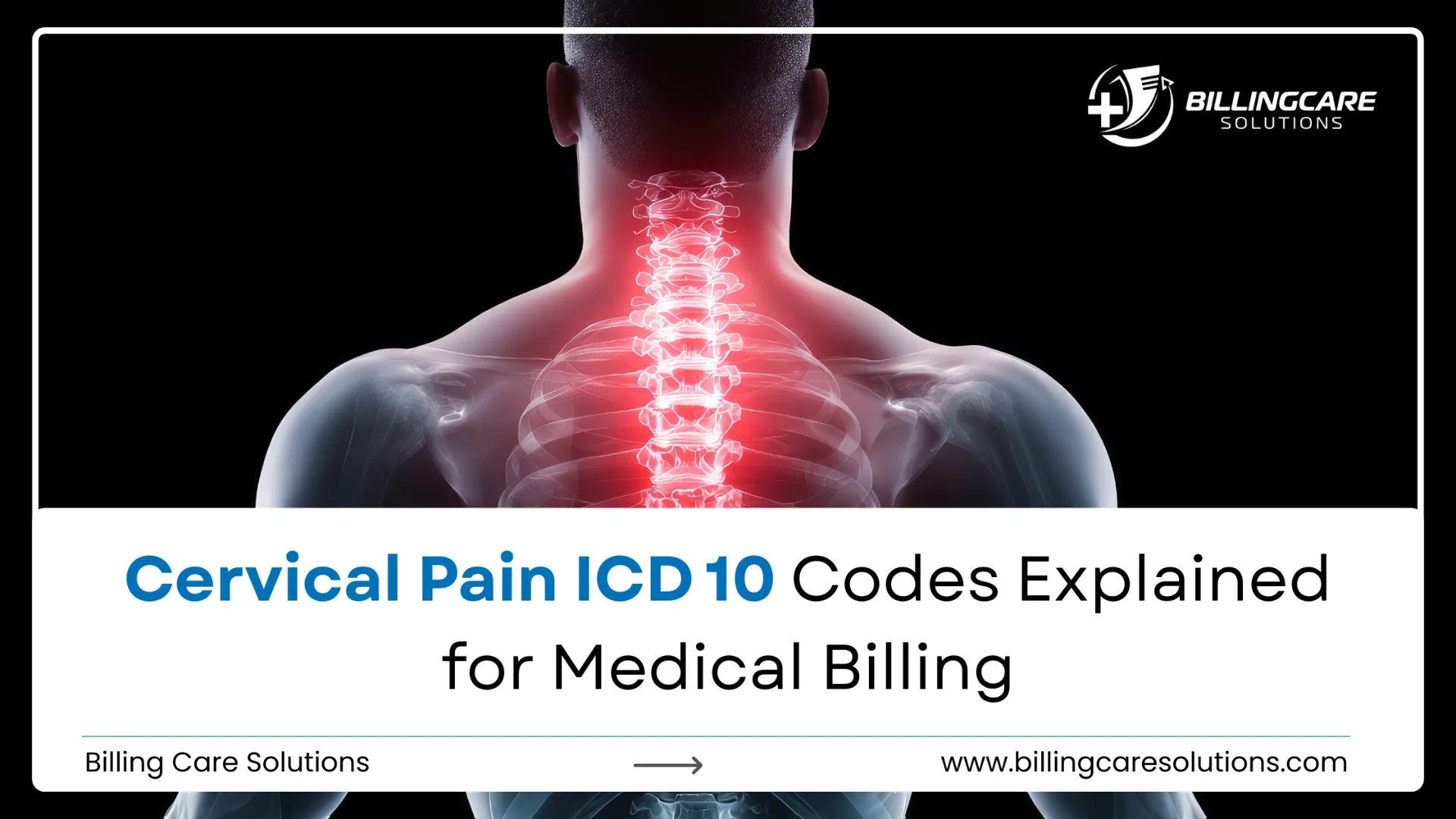
Cervical pain, also referred to as neck pain, is one of the most commonly recorded complaints due to musculoskeletal concerns. It is important for healthcare providers and medical billers to be able to identify the correct cervical pain ICD 10 codes for documentation to promote efficiency, make sure adequate reimbursement is collected, and to follow billing policy. This guide outlines the many components involved in coding cervical pain to assist in billing and coding processes, in order to promote the financial wellbeing of the practice.
Understanding Cervical Pain ICD 10 Coding
The World Health Organization, in the 10th revision of the International Statistical Classification of Diseases and Related Health Problems, offers specific coding for documentation of pain in the cervical region and disorders associated with the neck. Use of cervical pain ICD 10 codes guarantees that providers are reimbursed for the services rendered, and that the claim is processed.
Cervical pain is discomfort due to the pain that is felt in the neck, which involves the seven cervical vertebrae (C1-C7) that construct and comprise the upper part of the spine. The condition is inclusive of many diagnoses, including, but not limited to, muscle strain, poor posture, degenerative disc disease, herniated disk, arthritis, and trauma.
Primary Cervical Pain ICD 10 Codes
One primary symptom that falls within ICD 10 code symptom classifications is M54.2, which falls within the scope of Cervicalgia, also referred to as neck pain. However, medical billers must take into consideration the variations of related codes that could be more applicable to the case at hand, based on the diagnosis and the clinical documentation.
Cervical Pain Main Code
M 54.2-Cervicalgia
This code is the primary coding reference for general neck pain diagnoses who do not possess further diagnoses. This is applicable for individuals who have pain within the cervical region and do not possess clear manifestations of radiculopathy, myelopathy, or any other specifics of the pathologies.
| ICD-10 Code | Description | When to Use |
|---|---|---|
| M54.2 | Cervicalgia | Use for general neck pain without a specific cause. |
| M50.20 | Other cervical disc displacement, unspecified cervical region | Use when disc displacement is present in the cervical region, but the level is not specified. |
| M50.30 | Other cervical disc degeneration, unspecified cervical region | Use for degenerative disc disease in the cervical spine when the specific level is not documented. |
| M53.0 | Cervicocranial syndrome | Use when pain affects the neck and head connection. |
| M53.1 | Cervicobrachial syndrome | Use when pain radiates from the neck to the arm. |
| M47.812 | Spondylosis without myelopathy or radiculopathy, cervical region | Use for age-related wear and tear of the cervical spine without nerve involvement. |
| M48.02 | Spinal stenosis, cervical region | Use when there is narrowing of the spinal canal in the neck. |
| M99.01 | Segmental and somatic dysfunction of cervical region | Use for biomechanical dysfunction of the neck segments. |
Specific Cervical Radiculopathy Codes
When cervical pain involves nerve root compression or radiculopathy, more specific codes should be used:
| ICD-10 Code | Description | When to Use |
|---|---|---|
| M50.10 | Cervical disc disorder with radiculopathy, unspecified cervical region | Use when a cervical disc disorder with nerve root involvement is present but the cervical level is not specified. |
| M50.11 | Cervical disc disorder with radiculopathy, high cervical region | Use when radiculopathy originates from a disc disorder in the high cervical region (C1–C2). |
| M50.12 | Cervical disc disorder with radiculopathy, mid-cervical region | Use when radiculopathy is caused by a disc disorder in the mid-cervical region (C3–C6). |
| M50.13 | Cervical disc disorder with radiculopathy, cervicothoracic region | Use when radiculopathy originates from a disc disorder in the cervicothoracic junction (C7–T1). |
Cervical Myelopathy Codes
For cases involving spinal cord compression:
| ICD-10 Code | Description | When to Use |
|---|---|---|
| M50.00 | Cervical disc disorder with myelopathy, unspecified cervical region | Use when a cervical disc disorder causes spinal cord involvement, but the cervical level is not specified. |
| M50.01 | Cervical disc disorder with myelopathy, high cervical region | Use when myelopathy originates from a disc disorder in the high cervical region (C1–C2). |
| M50.02 | Cervical disc disorder with myelopathy, mid-cervical region | Use when myelopathy is caused by a disc disorder in the mid-cervical region (C3–C6). |
| M50.03 | Cervical disc disorder with myelopathy, cervicothoracic region | Use when myelopathy originates from a disc disorder in the cervicothoracic junction (C7–T1). |
Trauma-Related Cervical Pain Codes
| ICD-10 Code | Description | When to Use |
|---|---|---|
| S13.4XXA | Sprain of ligaments of cervical spine, initial encounter | Use for the first visit or treatment of a cervical ligament sprain. |
| S13.4XXD | Sprain of ligaments of cervical spine, subsequent encounter | Use for follow-up visits or ongoing care after the initial encounter for a cervical ligament sprain. |
Coding Guidelines for Cervical Pain ICD 10
To ensure the likelihood of claims not being rejected and ensuring that bills being generated of cervical pain related ICD 10 codes reflect the intended documentation, it is crucial to take into consideration the following guidelines.
1.Specificity is Critical
In any case, please be certain that the documentation is the most precise in reference to the physician’s documentation. If the documentation cites a particular area of cervical involvement, i.e. high, mid or cervicothoracic, please be certain to utilize the more applicable coding reference in place of the general coding reference.
2. Documentation Requirements
The selection of codes must be substantiated. The medical record should state:
- Pain location (cervical area)
- How long the symptoms have been present
- What symptoms are present, and are they associated? (radiculopathy, and related symptoms, stiffness, restricted motion)
- What was the cause if it is known? (e.g., trauma, degeneration, and related symptoms, strain)
- What treatments were done prior and was the treatment effective
3. Laterality and Specificity
Certain cervical spine conditions are more correct with lateral descriptors (right, left). Always verify if the codes necessitate the use of a seventh character or need more detail.
4. Multiple Coding
When a patient presents with cervical pain and other comorbidities, it may be necessary to apply more than one code. For instance, if a patient presents with cervicalgia and cervical radiculopathy, the two conditions should be coded independently if they are documented.
5. Encounter Type
For cervical trauma related pain, the seventh character extension is mandatory, along with the associated type of encounter:
A: Initially encountered
D: Encountered subsequently
S: Sequela
Common Billing Errors to Avoid
Medical billers need to be careful when incorporating the ICD 10 codes for cervical pain by:
Obscure Codes:
If the medical record mentions the details of the cervical diagnosis and has not been coded to reflect the specificity of the documentation (M54.2) which is the general cervicalgia code, they will end up with the medical request clarifications, or denials based on this error.
Improper Order:
The primary diagnosis is to be followed by the secondary diagnoses. If cervical pain is the primary reason for the visit, then the diagnosis is to be cervical pain.
Absent Added Character:
The medical billers will have to be instructed that as far as the codes go, there are some that will need the seventh character added. This will be reason enough to deny a claim.
Unsupported Clinical Documentation:
The documentation that is in the physician's notes has to support the code that is selected. If they go beyond documentation, that is considered upcoding, and it has audit consequences.
Tips for Accurate Cervical Pain ICD 10 Coding
Billing practices can be improved in several ways:
Ongoing Education:
The ICD-10 codes and their modifications as well as their associated guidelines can be taught to the medical billing/ coding staff on a periodic basis to help them learn the modifications to the codes.
Clinical Documentation Improvement (CDI):
Documentation should be complete, and accurate, and support the codes that are chosen. If the code contains the associated diagnosis, then the documentation needs to be improved.
Use of Coding Resources:
Make use of the official coding manuals like the ICD-10-CM, coding software, and the guidelines from the professional associations.
Pre-Claim Review:
Establish a process to review claims prior to submission to identify possible errors or omissions.
Denial Management:
Monitor claim denials pertaining to coding for cervical pain to recognize trends and take corrective action.
Updates and Changes
The ICD-10 code set is revised a year later and the changes normally become effective on the 1 st of October every year. Medical billing specialists are expected to remain aware of:
- New codes added to the system
- Codes that were deleted or terminated.
- Revised code descriptions
Changed coding guidelines
By subscribing to updates provided by the Centers of Medicare and Medicaid Services (CMS) and the American Medical Association (AMA), you will be able to make sure that your practice is up to date with the new requirements in the fields of coding.
Conclusion:
Coding of cervical pain ICD 10 should be mastered to be able to make correct medical payments and achieve maximum reimbursement. Through learning the elements of such codes as M54.2 and associated cervical disorder codes, applying the appropriate documentation habits, and keeping pace with the changes in the coding, medical practices would be able to reduce the claims rejections and sustain financial soundness.
The intricacy of cervical pain ICD 10 coding presupposes paying attention to detail and lifelong learning and in many cases, the skills of professional medical billing experts. Regardless of whether you are to work with basic cervicalgia or with some more complicated issues related to radiculopathy or myelopathy, proper coding will guarantee that the services of healthcare providers will be justly compensated without breaking the rules and regulations.
At Billing Care Solutions, we are aware of the medical practices difficulties that are confronted with the ICD-10 coding and medical billing complexities. To achieve optimal reimbursement and reduce expenses on administration, our team of qualified medical billing specialists will focus on proper coding, claims and revenue cycle management to assist your practice in maximizing reimbursement and reducing administrative overhead. Our experience with cervical pain ICD 10 coding, and full billing service will make sure that your practice is compliant, and in good health.
Contact Billing Care Solutions today and ask us how we will streamline your billing processes and enhance the bottom line of your practice.
