Blogs

January 19, 2026

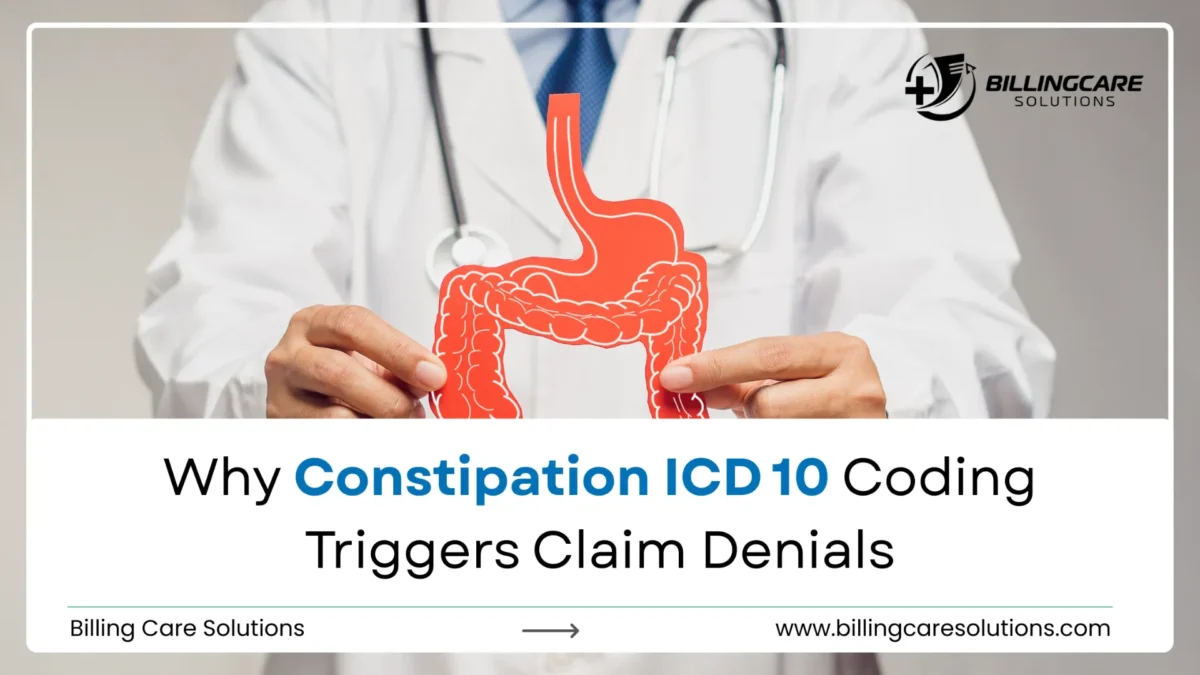
Why Constipation ICD 10 Coding Triggers Claim Denials

One of the most frequently documented gastrointestinal disorders in clinical practice is constipation which affects millions of patients every year. Nevertheless, even though it is rather common, a medical billing specialist may face claim denials based on the errors in Constipation ICD 10 coding.
January 15, 2026

Understanding Prediabetes ICD 10 Codes in Medical Billing

Prediabetes has emerged as one of the emerging health issues in the United States with over 98 million adults being diagnosed with the condition as per the latest CDC statistics. To health practitioners and medical billing professionals, the correct coding of prediabetes diagnosis
January 14, 2026

Inpatient vs Outpatient Billing Differences Explained Clearly

The difference between inpatient and outpatient services is an essential issue to be known by health care providers, billing specialists, and patients. Medical billing may be complicated and the information about the difference between those two categories
January 12, 2026

Migraine ICD 10 Coding Guide for Accurate Medical Billing

The migraine conditions impact millions of patients annually and continue to be among the commonest neurological diseases that are administered in outpatient clinics, emergency rooms, and specialty practices. Regardless of the prevalence of migraines, they remain one of the largest points of confusion when it comes to coding and denials of claims.
January 8, 2026

Understanding Dizziness ICD 10 Codes in Outpatient and ER Billing

Proper medical billing demands the correct diagnosis coding and this is critical to such common complaints as dizziness. The role of the dizziness ICD 10 codes in outpatient and emergency room billing is essential to the reimbursement rates and claim approval.
January 7, 2026

Asthma ICD 10 Codes in 2026: A Billing Guide for Accurate Claims

The accuracy of medical billing starts with accurate coding of diagnosis and the knowledge of Asthma ICD 10 codes is important to healthcare providers who handle respiratory diseases. Through good coding techniques, health institutions can secure maximum reimbursements, reduced claim rejections, and adherence to the existing health care policies.
January 6, 2026

How to Document and Code Right Shoulder Pain ICD 10 Correctly

Proper healthcare billing and reimbursement is based upon accurate medical coding. In the instance of shoulder pain, especially right shoulder pain ICD 10 coding, accuracy is never as important. To enable effective handling of claims and proper care delivery to patients, healthcare providers ought to be aware of the documentation and coding peculiarities.
January 5, 2026

Neck Pain ICD 10 Code Updates Every Billing Team Should Know

One of the most prevalent musculoskeletal complaints in medical practice is neck pain, which afflicts millions of patients every year. To medical billing professionals and healthcare providers, proper reimbursement and tracking care of patients requires proper documentation of the correct Neck Pain ICD 10 codes.
January 2, 2026

Low Back Pain ICD 10 Codes Explained for Accurate Medical Billing

One of the most prevalent causes of patients visiting medical care in the United States is low back pain. In the case of healthcare providers and medical billing professionals, it is obligatory to comprehend indicators of Low Back Pain ICD 10 codes to appropriately document and inappropriate cases to receive reimbursements and adhere to insurance regulations.
December 30, 2025

A Complete Guide to the 8 Minute Rule for Home Health Services

Understanding the 8 minute rule is a must for home health agencies if they want to bill correctly and be in line with Medicare regulations. This guide explains the 8 minute rule thoroughly, covering everything from simple calculations to how you can actually use the rule in your work.
December 30, 2025

From Diagnosis to Claim: Using Dementia ICD 10 Codes Correctly

For successful reimbursement in the healthcare system, accurate medical coding is essential, and even more so in neurodegenerative cases, given the level of detail needed. ICD 10 coding pertaining to dementia is an important component of the healthcare reimbursement process, as dementia diagnoses
December 26, 2025

Leveraging Accurate Abdominal Pain ICD-10 Coding for Better Revenue

Abdominal Pain ICD-10 coding is among the top most frequent patient symptoms, based on classification usage in the medical documentation and billing field. The abdominal pain is the most common inquiry, in a way, to be presented in primary care, emergency departments, urgent care centers, and specialty practices.
December 24, 2025

BPH ICD-10 Coding: How Accuracy Affects Urology Reimbursement

BPH ICD-10 coding is a major factor behind accurate medical billing and reimbursement in the field of urology. Benign Prostatic Hyperplasia is one of the most frequent causes recorded in the files of elderly male patients, and the wrong coding, therefore, can have a direct effect on the acceptance of the claim
December 19, 2025

Left Knee Pain ICD-10 Coding Guide to Reduce Claim Denials

Leftβ€‹β€β€‹β€Œβ€β€‹β€β€Œβ€‹β€β€‹β€Œβ€β€‹β€β€Œ knee pain is one of the most common reasons for primary care, orthopedics, and pain management practices to be visited. Patients come with complaints of knee pain resulting from traumatic events, degenerative diseases, overuse, or even as a consequence of some other medical conditions.
December 17, 2025

CAD ICD-10 Coding Guide for Accurate Medical Billing

Healthcareβ€‹β€β€‹β€Œβ€β€‹β€β€Œβ€‹β€β€‹β€Œβ€β€‹β€β€Œ providers, insurance companies, and patients must have accurate medical billing at all times. One of the major cardiac issues, Coronary Artery Disease (CAD), is the case that needs exact documentation and coding.
December 17, 2025

Shortness of Breath ICD-10 Code Explained for Accurate Medical Billing

Accurateβ€‹β€β€‹β€Œβ€β€‹β€β€Œβ€‹β€β€‹β€Œβ€β€‹β€β€Œ coding of shortness of breath is very essential to go along with the claim submission, reimbursement, and compliance with the regulations. By using the proper Shortness of Breath ICD-10 Code in conjunction with the appropriate CPT codes and modifiers
December 15, 2025

Right Hand Pain ICD-10 Code M79.641: Guide for Accurate Coding

Accurateβ€‹β€β€‹β€Œβ€β€‹β€β€Œβ€‹β€β€‹β€Œβ€β€‹β€β€Œ medical coding is, for healthcare providers, a fundamental factor that supports the whole patient care process, enables proper reimbursement, and ensures data integrity. In the case of a patient who complains of pain in the right hand, the detailed ICD-10-CM system requires that the correct code be chosen.
December 12, 2025

The Role of ICD-10 and CPT Codes in Superbills Explained

In the world of medical billing, accuracy is the main thing. A smallest coding mistake can lead to a whole bunch of issues like delayed payments, claim denials, or even compliance problems. Superbills are the answer to that problem. A superbill is a crucial document that links the codes that the payers understand with the services that the providers offer.
December 5, 2025

How to Bill CPT 93306 Correctly and Reduce Denials

Billingβ€β€Œβ€β€β€Œβ€β€Œβ€β€β€Œ for Cardiology should be done correctly by having great accuracy, paying close attention to the details, and understanding the payer rules clearly. One of the most frequently denied echocardiogram units is the CPT 93306, which, however, is also the largest proportion of the codes to be used in the echocardiogram.
December 3, 2025

Complete Guide to CPT 90832 for Psychotherapy Billing

Billingβ€β€Œβ€β€β€Œβ€β€Œβ€β€β€Œ for psychotherapy services is often a tricky thing to do. It is very useful to know how to use CPT codes correctly if you want to get paid properly and keep your account in good standing with the authorities. One of the frequent things that you have to do in a psychiatric outpatient clinic is to use CPT 90832.
December 3, 2025

FQHC Compliance and Billing: Best Practices for Community Health Clinics

Communityβ€β€Œβ€β€β€Œβ€β€Œβ€β€β€Œ health clinics and Federally Qualified Health Centers (FQHCs) are the primary providers of essential medical care to the populations that are most neglected.